

The Time Machine
Free to read
 ✓
Author
Herbert George Wells (1866–1946) was an English novelist, historian, social critic, and essayist best known as one of the founders of modern science fiction. His imaginative novels about time travel, alien invasion, gene
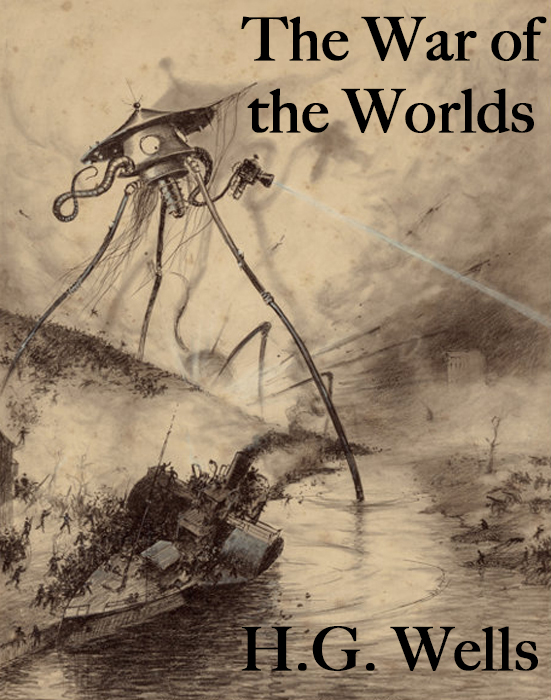
Herbert George Wells (1866–1946) was an English novelist, historian, social critic, and essayist best known as one of the founders of modern science fiction. His imaginative novels about time travel, alien invasion, genetic experimentation, and technological change anticipated many ideas that later became central to the genre. At the same time, Wells used speculative fiction to examine social inequality, human progress, war, and the dangers of uncontrolled scientific development. Wells was born on September 21, 1866, in Bromley, Kent, England, into a lower-middle-class family. His father was a professional cricketer and shopkeeper, while his mother worked as a domestic servant before her marriage. Wells's family experienced financial difficulties, and at the age of fourteen he was apprenticed to a draper. He later worked as a teacher and studied science at the Normal School of Science in London, where he was taught by the distinguished biologist Thomas Henry Huxley. Wells's scientific education strongly influenced his writing. He became fascinated by evolutionary theory, biology, physics, and the possible consequences of scientific discovery. After working as a teacher and journalist, he began publishing fiction in the 1890s. His early success quickly established him as an original and imaginative writer. Between 1895 and 1898, Wells produced a remarkable series of novels that transformed popular literature. The Time Machine (1895) introduced the idea of a machine capable of carrying its user through time and used the distant future to explore class division and human evolution. The Island of Doctor Moreau (1896) examined the ethics of scientific experimentation, while The Invisible Man (1897) explored the psychological and social consequences of possessing extraordinary power. Wells's reputation grew further with The War of the Worlds (1898), one of the earliest and most influential alien-invasion novels. The story of Martians attacking Earth combines scientific speculation with a powerful examination of imperialism, vulnerability, and human civilization. Other important works from this period include The First Men in the Moon and The War in the Air. Although Wells became famous for science fiction, his literary interests extended far beyond the genre. Novels such as Kipps, Love and Mr. Lewisham, The History of Mr Polly, and Tono-Bungay portray English society and the lives of ordinary people. His fiction often combines humor and social observation with criticism of class divisions, economic inequality, and outdated institutions. Wells was also deeply concerned with politics and the future of humanity. He became associated with the Fabian Society and advocated social reform, international cooperation, education, and a more rational organization of society. His nonfiction works, including A Modern Utopia, The Outline of History, and The Shape of Things to Come, reflect his belief that humanity could use knowledge and social planning to build a better future. The First World War profoundly affected Wells's thinking. Although he initially believed that modern civilization could progress toward a more peaceful and rational world, the devastation of industrial warfare made him increasingly concerned about the destructive potential of technology. His later writings frequently addressed war, global politics, human survival, and the future of civilization. Wells was an exceptionally prolific writer, producing more than fifty novels as well as numerous works of history, philosophy, politics, and social commentary. His personal life was also unconventional for his time, and he had several relationships that reflected his progressive views on marriage and sexuality. He remained an influential public intellectual throughout much of his life. Herbert George Wells died in London on August 13, 1946. His influence on science fiction and popular culture has been enormous. Concepts introduced or popularized in his fiction—including time machines, invisible humans, alien invasions, and genetic experimentation—have become permanent elements of modern storytelling. Wells is remembered not only as a pioneering science-fiction writer but also as a major social thinker who used imaginative literature to question the direction of human civilization.
Free to read
Free to read

Free to read

Free to read

Free to read
H. G. Wells's work is in the public domain — free for everyone, forever.
Payments are handled by Stripe. You can see everything you have given on your purchases page.