
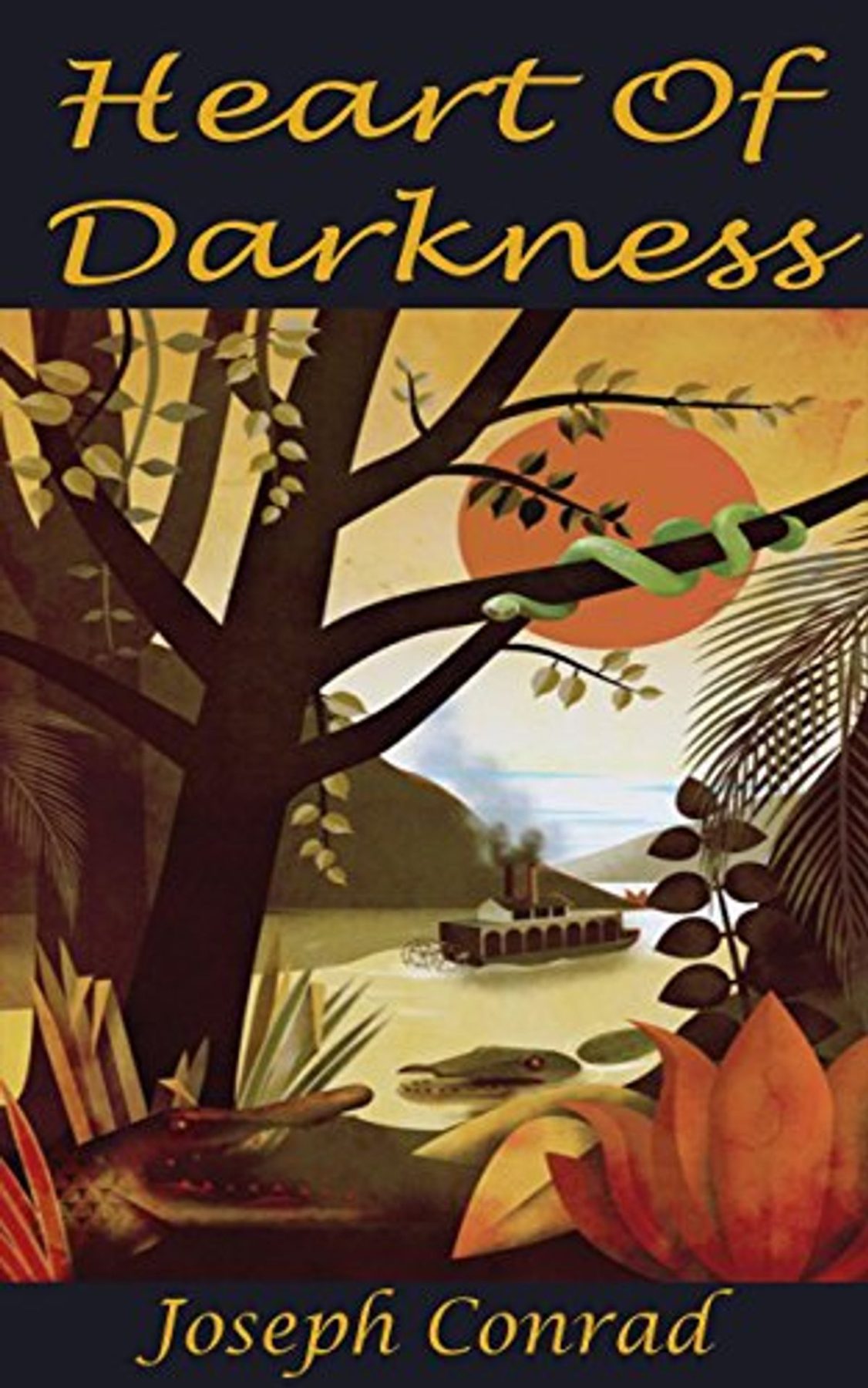
Heart of Darkness
Free to read
 ✓
Author
Józef Teodor Konrad Korzeniowski (1857–1924), better known by his pen name Joseph Conrad, was a Polish-British novelist and short-story writer whose works are regarded as important contributions to modern English literat
Józef Teodor Konrad Korzeniowski (1857–1924), better known by his pen name Joseph Conrad, was a Polish-British novelist and short-story writer whose works are regarded as important contributions to modern English literature. Although English was his third language, Conrad became one of the most accomplished English prose stylists of his generation. His fiction is known for its psychological depth, complex narrative structures, and exploration of morality, imperialism, isolation, and the uncertainties of human nature. Conrad was born on December 3, 1857, in Berdychiv, in the Russian Empire, to a Polish family deeply involved in the country's political and cultural struggle for independence. His father, Apollo Korzeniowski, was a writer, translator, and political activist, while his mother, Ewa, came from an educated Polish family. Both parents were imprisoned and exiled by the Russian authorities, and they died when Conrad was still a child. He was subsequently raised by relatives. At the age of seventeen, Conrad left Poland and began a career in the French and British merchant navies. He spent roughly two decades at sea, traveling to Africa, Asia, and other parts of the world and eventually becoming a British citizen. His experiences as a sailor provided the material for many of his later works and gave him firsthand knowledge of the maritime world, colonial societies, and the psychological pressures of isolation and danger. Conrad began his literary career in English and published his first novel, Almayer's Folly, in 1895. He followed it with works such as An Outcast of the Islands, Lord Jim, and Nostromo. His famous novella Heart of Darkness (1899) draws upon his experiences in the Congo and offers a disturbing examination of European imperialism, violence, and the darkness within human civilization. Among Conrad's most important novels are Lord Jim (1900), Nostromo (1904), The Secret Agent (1907), and Under Western Eyes (1911). His fiction frequently uses unreliable narrators, fragmented chronology, stories within stories, and shifting perspectives. Rather than providing simple moral judgments, Conrad often presents situations in which characters must confront ambiguity, guilt, loyalty, betrayal, and the consequences of their choices. Conrad's literary style is notable for its rich and sometimes deliberately complex prose. His maritime settings provided a framework for exploring broader questions about human identity and moral responsibility. He was also deeply concerned with European colonialism and political violence, although his treatment of these subjects has been the subject of continuing critical debate, particularly regarding his representations of race and colonial societies. Joseph Conrad died on August 3, 1924, in Bishopsbourne, Kent, England. He had achieved considerable literary recognition during his lifetime and was eventually regarded as one of the major writers of English literature. His influence can be seen in the work of modernist and later writers, including T. S. Eliot, Virginia Woolf, William Faulkner, and Ernest Hemingway. Conrad's exploration of consciousness, moral uncertainty, and the limits of storytelling helped shape the development of the modern novel.
Joseph Conrad's work is in the public domain — free for everyone, forever.
Payments are handled by Stripe. You can see everything you have given on your purchases page.

