
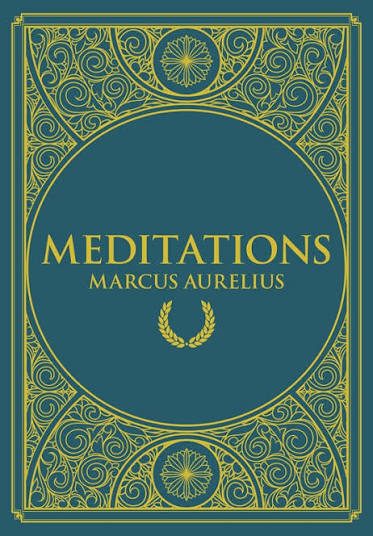
Meditations
Free to read
 ✓
Author
Marcus Aurelius Antoninus (121–180 AD) was a Roman emperor, philosopher, and one of the most important representatives of Stoicism. He ruled the Roman Empire from 161 until his death in 180 and is often remembered as the
Marcus Aurelius Antoninus (121–180 AD) was a Roman emperor, philosopher, and one of the most important representatives of Stoicism. He ruled the Roman Empire from 161 until his death in 180 and is often remembered as the “philosopher-emperor.” His surviving philosophical writings, known as Meditations, offer a deeply personal reflection on duty, self-discipline, mortality, reason, and the proper way to live. Marcus Aurelius was born on April 26, 121 AD, in Rome, into a wealthy and influential Roman family. His father died when Marcus was still young, and he was subsequently raised within the imperial household. From an early age, he received an extensive education in rhetoric, literature, philosophy, and law. He became particularly attracted to Stoic philosophy, which emphasized rationality, self-control, acceptance of fate, and moral responsibility. In 138 AD, Marcus was adopted by the emperor Antoninus Pius and designated as his successor. He married Faustina the Younger, the daughter of Antoninus Pius, and became increasingly involved in government and administration. When Antoninus died in 161, Marcus became emperor and initially ruled jointly with his adoptive brother Lucius Verus, an unusual arrangement in Roman imperial history. Marcus's reign was marked by serious challenges. The Roman Empire faced wars against the Parthians and Germanic tribes, as well as the devastating Antonine Plague. Marcus personally spent much of the later part of his reign campaigning along the empire's northern frontier. Despite these difficulties, he continued to regard the responsibilities of leadership as a moral duty rather than simply a source of power. His most famous work, Meditations, was written in Greek, probably during his military campaigns and never intended for publication. The book consists of personal reflections rather than a systematic philosophical treatise. Marcus repeatedly reminds himself to remain rational, accept what lies beyond his control, treat others with justice, and remember the temporary nature of human life. His writing provides an unusually intimate portrait of an ancient ruler struggling to live according to philosophical principles. Marcus Aurelius died on March 17, 180 AD, probably at Vindobona (modern Vienna) or in the nearby region during a military campaign. He was succeeded by his son Commodus, whose reign marked a significant change from the political and philosophical character of his father's rule. Marcus Aurelius's legacy, however, endured through Meditations, which became one of the most influential works of Stoic philosophy and continues to be read as a guide to resilience, self-discipline, and ethical living.
Free to read
Marcus Aurelius's work is in the public domain — free for everyone, forever.
Payments are handled by Stripe. You can see everything you have given on your purchases page.