
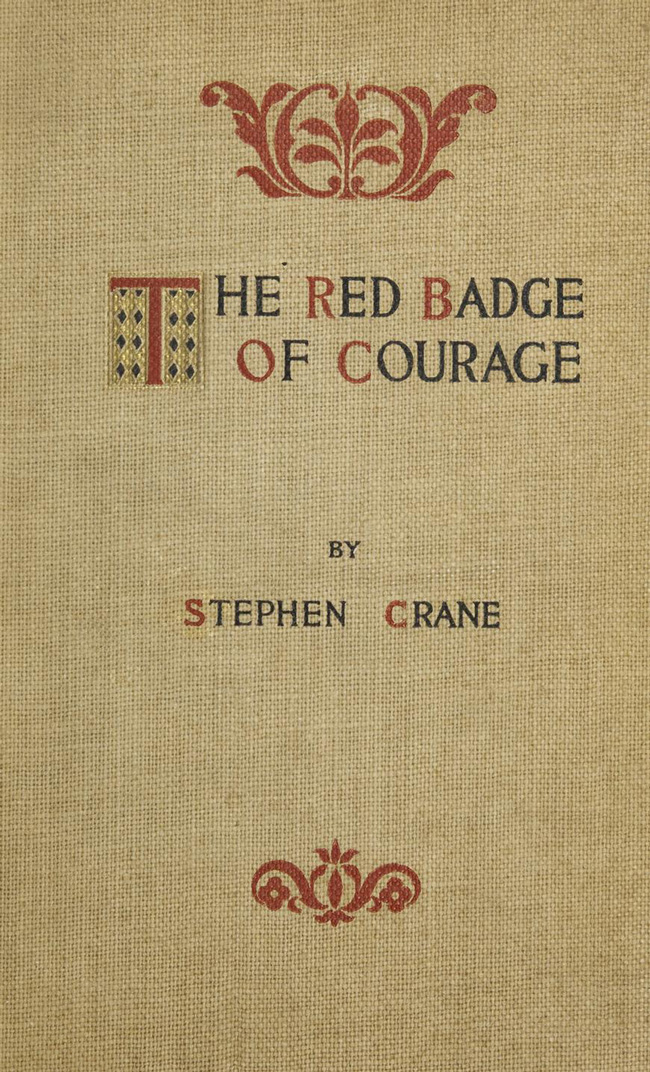
The Red Badge of Courage
Free to read
 ✓
Author
Stephen Crane (1871–1900) was an American novelist, poet, journalist, and short-story writer whose innovative work helped shape modern American literature. Born in Newark, New Jersey, he grew up in a large Methodist fami
Stephen Crane (1871–1900) was an American novelist, poet, journalist, and short-story writer whose innovative work helped shape modern American literature. Born in Newark, New Jersey, he grew up in a large Methodist family and began writing at an early age. Although his literary career lasted only about a decade, Crane produced works that had a lasting influence on American realism, naturalism, and modernist writing. Crane gained international recognition with Maggie: A Girl of the Streets (1893), a stark novel about poverty, violence, and life in the New York slums. The book's naturalistic treatment of social hardship was considered controversial, and Crane initially struggled to find a publisher. His breakthrough came with The Red Badge of Courage (1895), a psychologically intense novel about a young soldier's experience of fear, courage, and confusion during the American Civil War. Although Crane had not experienced combat when he wrote The Red Badge of Courage, he later worked as a war correspondent and reported on conflicts in Cuba and Greece. His experiences as a journalist contributed to the vivid realism of his later writing. His famous short story “The Open Boat” (1897) was based on his experience of surviving a shipwreck while traveling to Cuba. Crane was also an innovative poet. His collection The Black Riders (1895) and later poems use brief, striking images and unconventional forms to explore death, suffering, nature, war, and the human struggle for meaning. His writing often avoids sentimentality and presents individuals confronting indifferent or unpredictable forces beyond their control. Stephen Crane suffered from poor health throughout his adult life and died of tuberculosis in Badenweiler, Germany, in 1900, at only twenty-eight years of age. Despite his short life, he left a remarkable body of work. His psychological realism, vivid imagery, fragmented style, and treatment of violence and uncertainty anticipated important developments in twentieth-century literature.
Free to read
Free to read
Stephen Crane's work is in the public domain — free for everyone, forever.
Payments are handled by Stripe. You can see everything you have given on your purchases page.