
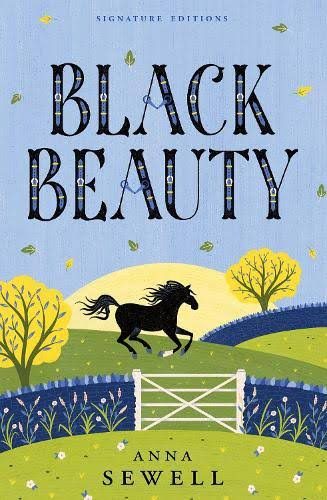
Black Beauty
Free to read
 ✓
Author
Anna Sewell (1820–1878) was an English novelist best known for her single published novel, Black Beauty. Although she wrote only one book, it became one of the most influential works of animal literature and has remained
Anna Sewell (1820–1878) was an English novelist best known for her single published novel, Black Beauty. Although she wrote only one book, it became one of the most influential works of animal literature and has remained a beloved classic for generations. Through the story of a horse, Sewell drew attention to animal welfare, humane treatment, and the responsibilities of those who care for animals. Anna Sewell was born on March 30, 1820, in Great Yarmouth, Norfolk, England. She grew up in a Quaker family with strong values of kindness, compassion, and moral responsibility. Her mother, Mary Wright Sewell, was a successful author of children's books and had a significant influence on Anna's literary interests. At the age of twelve, Sewell suffered an injury to her knees, and her health remained fragile throughout her life. The family later moved to Brighton in the hope that the milder climate would improve her condition. Although she experienced considerable physical limitations, Sewell maintained a strong interest in literature, animals, and the natural world. Her personal experience with horses was particularly important to her later work. She was deeply concerned by the suffering caused by cruel treatment of working horses, especially the use of harsh bits, improper harnesses, and excessive workloads. These concerns eventually became the central subject of her only novel. Sewell began writing Black Beauty around 1871, when she was already suffering from serious ill health. Unable to move around easily, she often dictated the manuscript to her mother or wrote it in small sections. The novel took several years to complete and was finally published in 1877, only a few months before Sewell's death. Black Beauty is presented as the autobiography of a horse, allowing readers to experience human behavior from an animal's perspective. The narrator describes his life through changing owners and circumstances, encountering both kindness and cruelty. The novel combines an engaging story with a serious moral argument for treating animals with care and respect. Sewell deliberately wrote the book for people who worked with horses, hoping that it would encourage more humane treatment rather than merely entertain readers. Her descriptions of working conditions and unnecessary cruelty helped bring greater public attention to animal welfare. The novel subsequently became an important influence on campaigns against the mistreatment of horses. Although Black Beauty is often classified as children's literature, its themes are considerably broader. The book explores compassion, responsibility, dignity, suffering, and the consequences of power over vulnerable beings. Its simple narrative voice and emotional directness have helped it remain accessible to both young readers and adults. Anna Sewell's health deteriorated rapidly after the publication of Black Beauty. She died on April 25, 1878, in Old Catton, near Norwich, less than five months after her novel appeared. She did not live to see the extraordinary international success that her book would achieve. Today, Anna Sewell is remembered primarily through Black Beauty, which has been translated into numerous languages and adapted for film, television, and other media. Her single novel established a lasting literary tradition of animal-centered storytelling and helped demonstrate how fiction could inspire greater compassion toward animals.
Free to read
Anna Sewell's work is in the public domain — free for everyone, forever.
Payments are handled by Stripe. You can see everything you have given on your purchases page.