
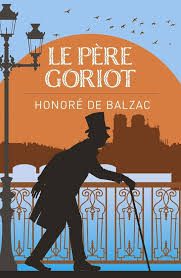
Père Goriot
Free to read
 ✓
Author
Honoré de Balzac (1799–1850) was a French novelist and playwright and one of the most important figures in nineteenth-century European literature. He is best known for La Comédie humaine (The Human Comedy), an immense se
Honoré de Balzac (1799–1850) was a French novelist and playwright and one of the most important figures in nineteenth-century European literature. He is best known for La Comédie humaine (The Human Comedy), an immense series of novels and stories portraying French society during the Restoration and the July Monarchy. Through his detailed descriptions of social classes, ambition, money, love, and political life, Balzac helped establish the foundations of literary realism. Balzac was born on May 20, 1799, in Tours, France, into a middle-class family. His father held various administrative positions, while his mother came from a prosperous family. Balzac was educated at the Collège de Vendôme and later studied law in Paris. Although his family expected him to pursue a conventional professional career, he decided to devote himself to literature. His early years as a writer were difficult. Balzac initially produced several works of popular fiction under pseudonyms, hoping to earn enough money to establish himself as an author. He also became involved in various unsuccessful business ventures, accumulating substantial debts. These financial difficulties remained a recurring problem throughout his life and contributed to his intense and disciplined approach to writing. Balzac achieved literary recognition with works such as Les Chouans (1829) and The Physiology of Marriage (1829). His major breakthrough came with Le Père Goriot (Father Goriot, 1835), which established many of the characteristics of his mature style. His novels frequently portray ambitious individuals attempting to rise through French society, often at considerable moral and emotional cost. Balzac eventually conceived his works as parts of a single vast literary project, which he called La Comédie humaine. The collection contains more than ninety completed or partially completed works and includes novels, novellas, and short stories. Many characters reappear in different works, creating an interconnected fictional world that reflects the complexity of real society. Among his most celebrated novels are Eugénie Grandet, Le Père Goriot, Lost Illusions, Cousin Bette, and The Black Sheep. His fiction explores the powerful influence of wealth and social position, as well as ambition, family relationships, romantic desire, corruption, and the tension between personal ideals and material reality. Balzac's writing is characterized by extraordinary attention to detail. He carefully described houses, clothing, landscapes, financial circumstances, and social customs, believing that physical surroundings could reveal the character and social position of the people who inhabited them. His work therefore combines psychological observation with a remarkably comprehensive portrait of society. Balzac worked with extraordinary intensity, often writing for long periods and revising his manuscripts extensively. His dedication to literature came at a considerable personal cost, contributing to exhaustion and poor health. Nevertheless, his productivity remained remarkable, and his ambition to create a literary representation of an entire society became one of the most influential projects in world literature. Balzac died in Paris on August 18, 1850, only a few months after marrying Ewelina Hańska, a Polish aristocrat with whom he had maintained a long correspondence. He was buried at Père Lachaise Cemetery, where Victor Hugo delivered a famous funeral oration. Balzac's influence on later literature was enormous. Writers such as Gustave Flaubert, Émile Zola, Marcel Proust, and many others recognized his importance. His detailed depiction of society and his complex understanding of human motives helped shape the development of realism and the modern novel. Today, Balzac is regarded as one of the great chroniclers of nineteenth-century life and one of the foundational figures of European realism.
Free to read

Free to read
Honoré de Balzac's work is in the public domain — free for everyone, forever.
Payments are handled by Stripe. You can see everything you have given on your purchases page.