
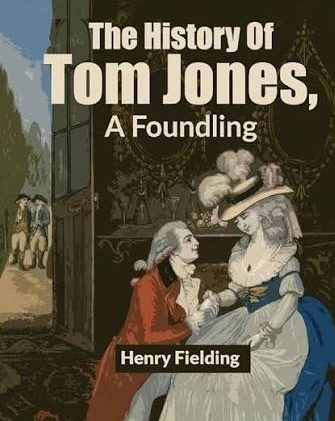
The History of Tom Jones, a Foundling
Free to read
 ✓
Author
Henry Fielding (1707–1754) was an English novelist, playwright, and magistrate who played a major role in the development of the modern English novel. He is best known for Tom Jones, a comic and expansive work that combi
Henry Fielding (1707–1754) was an English novelist, playwright, and magistrate who played a major role in the development of the modern English novel. He is best known for Tom Jones, a comic and expansive work that combines adventure, social observation, satire, and a sophisticated exploration of human nature. Together with Samuel Richardson and other eighteenth-century writers, Fielding helped establish the novel as a major literary form in English. Fielding was born on April 22, 1707, at Sharpham Park in Somerset, England, into a family connected with the English landed gentry. He was educated at Eton College, where he developed a lifelong interest in classical literature. He later studied at the University of Leiden in the Netherlands, but financial difficulties prevented him from completing his studies. Fielding initially pursued a career as a playwright and satirist. After returning to London, he wrote numerous successful comedies and political plays. His sharp wit and willingness to mock political figures and fashionable society eventually brought him into conflict with the authorities. The passage of the Licensing Act of 1737, which imposed strict controls on theatrical performances, effectively ended his career as a playwright. After turning away from the stage, Fielding began writing prose fiction. His first major novel, Joseph Andrews, was published in 1742. Originally conceived partly as a comic response to Samuel Richardson's Pamela, the novel developed into a much broader work of its own. It follows the adventures of the virtuous Joseph Andrews and his eccentric companion, the clergyman Parson Adams, while satirizing social hypocrisy and moral pretension. Fielding's masterpiece, The History of Tom Jones, a Foundling, appeared in 1749. The novel tells the story of Tom Jones, a generous but impulsive young man whose romantic and personal adventures unfold against a wide panorama of eighteenth-century English society. Fielding combines comedy, romance, social criticism, and moral reflection while maintaining a carefully constructed narrative. One of Fielding's great strengths was his ability to portray a wide variety of social classes and personalities. His novels contain aristocrats, servants, clergymen, lawyers, innkeepers, soldiers, and country people. Rather than presenting society as a simple division between good and evil, Fielding explored the contradictions between appearance and reality and emphasized the importance of genuine benevolence over superficial respectability. Fielding was also a significant political writer. With his half-brother John Fielding, he was involved in journalism and published satirical periodicals that criticized corruption and abuses of political power. His experience observing London society contributed to the sharp social perspective found throughout his fiction. In the later part of his career, Fielding entered public service. He studied law and became a magistrate at Westminster in 1748. He worked to combat crime and improve the administration of justice, often showing concern for the poor and disadvantaged. His experiences as a magistrate informed his final major novel, Amelia (1751), which is more serious and emotionally restrained than his earlier fiction. Fielding's health deteriorated during his final years. Hoping to recover, he traveled to Portugal for medical treatment, but he died in Lisbon on October 8, 1754, at the age of forty-seven. His experiences in Portugal were recorded in The Journal of a Voyage to Lisbon, published posthumously. Henry Fielding's contribution to English literature was enormous. His novels helped establish narrative techniques that became central to the development of the modern novel, including an intrusive narrator, complex plotting, realistic characterization, and broad social satire. Tom Jones remains his most celebrated work and is considered one of the great comic novels in the English language. Fielding is remembered as a master of eighteenth-century satire and one of the principal founders of the English novel.
Free to read
Henry Fielding's work is in the public domain — free for everyone, forever.
Payments are handled by Stripe. You can see everything you have given on your purchases page.