
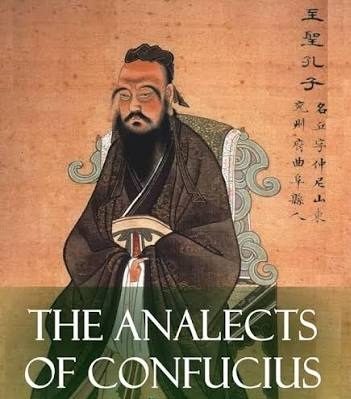
The Analects
Free to read
 ✓
Author
Confucius (551–479 BC) was an ancient Chinese philosopher, teacher, and political thinker whose ideas profoundly influenced Chinese civilization and the wider East Asian world. Known in Chinese as Kongzi or Kong Fuzi, he
Confucius (551–479 BC) was an ancient Chinese philosopher, teacher, and political thinker whose ideas profoundly influenced Chinese civilization and the wider East Asian world. Known in Chinese as Kongzi or Kong Fuzi, he developed an ethical and social philosophy centred on moral character, respect for family, education, and responsible government. His teachings later became the foundation of Confucianism. Confucius was traditionally born in 551 BC in the state of Lu, in what is now Shandong Province, China. His family was of modest means, though it claimed aristocratic ancestry. His father died when Confucius was young, and he was raised by his mother. Accounts of his early life come largely from later sources, especially the Records of the Grand Historian by Sima Qian, so some biographical details remain uncertain. From an early age, Confucius developed an interest in ritual, history, music, and the traditions of the Zhou dynasty. He pursued learning and eventually became known as a teacher who welcomed students from different backgrounds. Rather than presenting himself as the founder of an entirely new religion, he saw his work as restoring and interpreting the moral wisdom of earlier sages. Confucius believed that a stable society depended on individuals cultivating virtue and fulfilling their responsibilities toward others. One of his central concepts was ren, often translated as benevolence, humaneness, or compassion. He also emphasised li, the rituals, customs, and forms of conduct that help people express respect and maintain social harmony. Another important principle was yi, or moral rightness: the duty to act according to what is right rather than simply what is profitable. Family relationships occupied a central place in his teaching. Confucius stressed xiao, or filial piety, meaning respect and care for parents and ancestors. He believed that habits of responsibility and consideration learned within the family could extend to wider society. His ideal person, often called the junzi or exemplary person, was guided by learning, integrity, self-discipline, and concern for the common good rather than by social status alone. Confucius also had definite ideas about government. He argued that rulers should lead through virtue and personal example rather than relying primarily on punishment and coercion. A government whose leaders acted justly, he believed, would encourage people to behave ethically. He criticised rulers who pursued personal advantage at the expense of their responsibilities and hoped that wise counsel could improve political life. According to traditional accounts, Confucius held several administrative positions in the state of Lu and sought to influence its government. Disappointed by political rivalries and the reluctance of rulers to follow his advice, he travelled for years among different states, accompanied by some of his disciples. He hoped to find a ruler willing to put his principles into practice, but he met with limited success. He eventually returned to Lu and devoted much of his remaining life to teaching. Confucius’s philosophy is preserved chiefly in the Analects (Lunyu), a collection of sayings and conversations compiled by his followers and their later generations. The text presents his reflections on morality, education, leadership, friendship, and human relationships. It was not written by Confucius himself in the form of a single treatise, and its passages reflect a tradition that developed after his death. Confucius died in 479 BC, traditionally said to be in his home state of Lu. For generations, his ideas circulated among scholars and political thinkers, and during the Han dynasty they gained an increasingly prominent place in official education and government. Confucian learning later became central to the civil service examination system and shaped ideals of scholarship, family duty, and public service across East Asia. Today, Confucius is remembered as one of the most influential thinkers in world history. His teachings have inspired traditions of ethical reflection, education, and civic responsibility, while also prompting debate about hierarchy, social conformity, and authority. His enduring legacy lies in the questions he raised about how people can cultivate moral character, sustain humane relationships, and build a just society.
Free to read
Confucius's work is in the public domain — free for everyone, forever.
Payments are handled by Stripe. You can see everything you have given on your purchases page.