
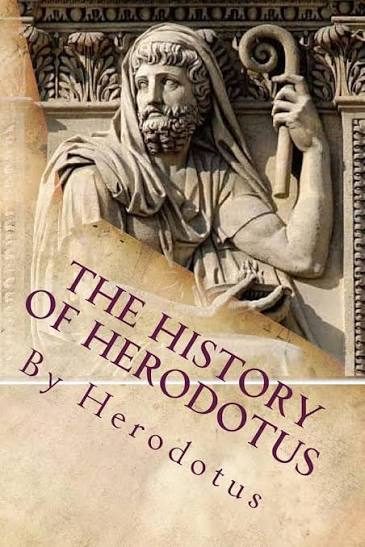
The History of Herodotus — Volume 1
Free to read
 ✓
Author
Herodotus (c. 484–c. 425 BC) was an ancient Greek historian from Halicarnassus in Asia Minor. He is traditionally known as the “Father of History” because he was one of the first writers to systematically investigate and
Herodotus (c. 484–c. 425 BC) was an ancient Greek historian from Halicarnassus in Asia Minor. He is traditionally known as the “Father of History” because he was one of the first writers to systematically investigate and record historical events. His only surviving work, The Histories, combines historical narrative with geography, ethnography, political observation, and accounts of the customs and traditions of many peoples. Herodotus was born around 484 BC in Halicarnassus, a Greek city on the southwestern coast of Asia Minor, in what is now Turkey. The city was part of the Persian Empire during his lifetime. Little is known with certainty about his family or early education, although ancient sources suggest that he belonged to an educated and prosperous environment. According to later traditions, Herodotus spent considerable time traveling through the ancient world. He is associated with journeys through Egypt, parts of the Persian Empire, the Greek mainland, and regions around the Black Sea. These travels gave him firsthand knowledge of different cultures and provided material for the geographical and ethnographic descriptions that form an important part of his historical writing. Herodotus's greatest achievement was The Histories, a work traditionally divided into nine books. Its central subject is the conflict between the Greek city-states and the Persian Empire, culminating in the Greco-Persian Wars of the early fifth century BC. Herodotus describes major events such as the Persian invasions of Greece and the battles of Marathon, Thermopylae, Salamis, and Plataea. However, The Histories is much broader than a simple account of war. Herodotus frequently pauses his narrative to describe the geography, religion, customs, political systems, and traditions of peoples such as the Egyptians, Persians, Scythians, Lydians, and Greeks. He was deeply interested in understanding why societies behaved differently and how cultural traditions shaped historical events. One of Herodotus's distinctive characteristics is his willingness to present different versions of the same story. He often indicates what he has heard from his sources and distinguishes between what he considers credible and what he regards with skepticism. At other times, he preserves remarkable stories even when their truth cannot be established. This mixture of critical inquiry, oral tradition, and storytelling makes The Histories both a historical source and a major work of ancient literature. Herodotus was particularly interested in the relationship between human ambition, power, fortune, and fate. His narratives repeatedly show powerful rulers becoming victims of excessive pride or poor judgment. Figures such as Croesus, Xerxes, and Darius appear not simply as political leaders but as human beings whose decisions are shaped by ambition, fear, confidence, and misunderstanding. The exact circumstances of Herodotus's later life and death are uncertain. Ancient traditions associate him with Thurii, a Greek colony in southern Italy, and some scholars believe that he may have spent his final years there. He probably died sometime around 425 BC, although neither the precise date nor the place of his death is securely known. Herodotus's influence on historical writing has been extraordinary. Later historians admired his attempt to investigate the causes and consequences of events rather than simply preserve traditional stories. Although some of his accounts contain legendary or inaccurate material by modern standards, The Histories remains an invaluable source for understanding the ancient Mediterranean and Near Eastern worlds. Herodotus is remembered not only as an early historian but also as a gifted storyteller and observer of human societies. His combination of historical investigation, travel writing, cultural description, and narrative art established a model that influenced generations of historians and writers. For this reason, he remains one of the foundational figures in the development of history as a literary and intellectual discipline.
Free to read
Free to read
Herodotus's work is in the public domain — free for everyone, forever.
Payments are handled by Stripe. You can see everything you have given on your purchases page.