
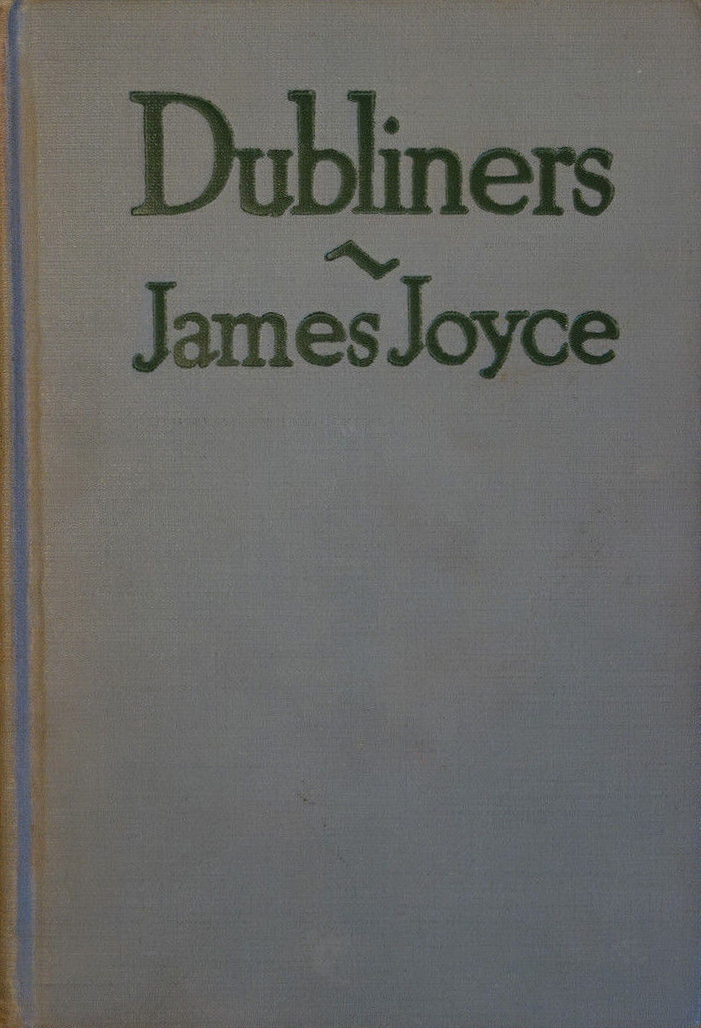
Dubliners
Free to read
 ✓
Author
James Augustine Joyce (1882–1941), better known as James Joyce, was an Irish novelist, short-story writer, poet, and one of the most influential figures of literary modernism. His innovative use of language, stream of co
James Augustine Joyce (1882–1941), better known as James Joyce, was an Irish novelist, short-story writer, poet, and one of the most influential figures of literary modernism. His innovative use of language, stream of consciousness, symbolism, and experimental narrative techniques transformed twentieth-century fiction. His major works include Dubliners, A Portrait of the Artist as a Young Man, Ulysses, and Finnegans Wake. Joyce was born on February 2, 1882, in Dublin, Ireland, into a large Catholic family. His father, John Stanislaus Joyce, was a talented but financially troubled man whose declining fortunes affected the family's life considerably. Joyce received his education at Clongowes Wood College and later at Belvedere College in Dublin. He subsequently studied modern languages at University College Dublin, graduating in 1902. From an early age, Joyce demonstrated exceptional literary ability and a strong interest in language and European literature. He gradually rejected the religious and nationalist expectations of his upbringing and developed the idea of becoming an independent artist. In 1904, he left Ireland with Nora Barnacle, his lifelong companion and later wife, beginning a largely self-imposed exile from his homeland. Joyce spent much of his adult life living in continental Europe, particularly in Trieste, Zürich, and Paris. Although he lived abroad, Dublin remained at the center of his imagination. His first major collection, Dubliners, published in 1914, consists of fifteen stories portraying different aspects of Dublin life. The stories explore themes of family, religion, paralysis, disappointment, and the limitations imposed by society. His semi-autobiographical novel A Portrait of the Artist as a Young Man appeared in book form in 1916. It follows Stephen Dedalus as he grows from childhood into young adulthood and struggles to free himself from the expectations of family, religion, and nation. The novel introduced techniques of interior narration that Joyce would develop much further in his later work. Joyce's masterpiece, Ulysses, was published in full in 1922. Set in Dublin during a single day, June 16, 1904, the novel follows Leopold Bloom, Stephen Dedalus, and other characters through a series of ordinary and extraordinary encounters. Inspired structurally by Homer's Odyssey, Ulysses transformed everyday experience into an epic narrative. Its extensive use of stream of consciousness, parody, linguistic experimentation, and shifting narrative styles made it one of the most challenging and influential novels of the modern era. Joyce's final major work, Finnegans Wake (1939), pushed linguistic experimentation even further. Written in an extraordinarily dense and multilingual style, the book blends dreams, mythology, history, wordplay, and multiple languages into a highly unconventional narrative. While difficult to read, it is regarded as one of the most radical experiments in the history of literature. Joyce's writing was deeply connected with Ireland, even though he spent most of his adult life outside the country. He repeatedly returned to Dublin as his central literary setting and examined Irish identity, Catholicism, nationalism, family life, and colonial experience. His works are also notable for their extraordinary attention to ordinary details, demonstrating how apparently insignificant moments can contain profound emotional and philosophical meaning. Joyce's later years were affected by severe problems with his eyesight and by the disruption caused by the Second World War. He died in Zürich, Switzerland, on January 13, 1941. His influence on modern literature is immense. Writers across the world have drawn upon his innovations in narrative, language, and psychological representation, while Ulysses in particular remains one of the defining works of twentieth-century literature.
Free to read

Free to read
James Joyce's work is in the public domain — free for everyone, forever.
Payments are handled by Stripe. You can see everything you have given on your purchases page.