
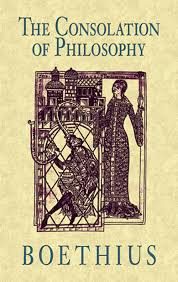
The Consolation of Philosophy
Free to read
 ✓
Author
Anicius Manlius Severinus Boethius (c. 477–524 AD) was a Roman philosopher, statesman, theologian, and writer who became one of the most influential thinkers of the early Middle Ages. Living during the transition from th
Anicius Manlius Severinus Boethius (c. 477–524 AD) was a Roman philosopher, statesman, theologian, and writer who became one of the most influential thinkers of the early Middle Ages. Living during the transition from the ancient Roman world to the medieval era, he sought to preserve and transmit Greek philosophical thought to the Latin-speaking West. Boethius was born around 477 AD into a prominent Roman family, probably in Rome. He was educated in philosophy, literature, and the classical sciences and became deeply familiar with the works of Plato, Aristotle, and other Greek thinkers. His intellectual ambition was to translate and explain the major works of Greek philosophy for Latin readers. He enjoyed a distinguished political career under the Ostrogothic king Theodoric the Great. Boethius rose rapidly through the Roman administration and became consul in 510. In 522, his two sons were appointed joint consuls, reflecting the high position that Boethius and his family held within the kingdom. Despite his political success, Boethius's career ended in disaster. He was accused of conspiring against King Theodoric and was imprisoned around 523. Boethius maintained his innocence and argued that he had been condemned because he defended the Roman Senate and opposed abuses of power. While imprisoned, Boethius wrote his most famous work, The Consolation of Philosophy. Written as a dialogue between the author and the allegorical figure of Philosophy, the book examines suffering, fortune, happiness, free will, providence, and the nature of true goodness. It combines philosophical argument with poetry and personal reflection. The Consolation of Philosophy became one of the most widely read philosophical works of the Middle Ages. Its discussion of the apparent conflict between divine foreknowledge and human freedom had a particularly strong influence on medieval Christian thought, although the work itself presents its arguments primarily through classical philosophical traditions. Boethius also produced important translations, commentaries, and logical works. His translations of and commentaries on Aristotle helped preserve Greek philosophical ideas for medieval scholars at a time when much of the ancient Greek intellectual tradition was becoming less accessible in Western Europe. His writings on logic remained influential in medieval education. Boethius was executed in 524 AD, probably at Theodoric's order, after his imprisonment and condemnation. Ancient accounts describe a brutal death, although details vary among sources. His execution transformed his final work into an especially powerful meditation on the relationship between suffering, justice, and wisdom. Boethius was later regarded as both a philosopher and, in the Christian tradition, a martyr. Although the precise nature of his religious thought has been debated, several theological works attributed to him became important in medieval Christian philosophy. His ideas influenced thinkers including Thomas Aquinas and shaped later discussions of providence, eternity, and free will. Boethius's lasting importance lies in his role as a bridge between classical antiquity and medieval Europe. Through his translations, commentaries, and original philosophy, he helped transmit ancient learning to later generations. The Consolation of Philosophy remains his best-known work and a major text in the history of Western philosophy and literature.
Free to read
Boethius's work is in the public domain — free for everyone, forever.
Payments are handled by Stripe. You can see everything you have given on your purchases page.