
Audiobook
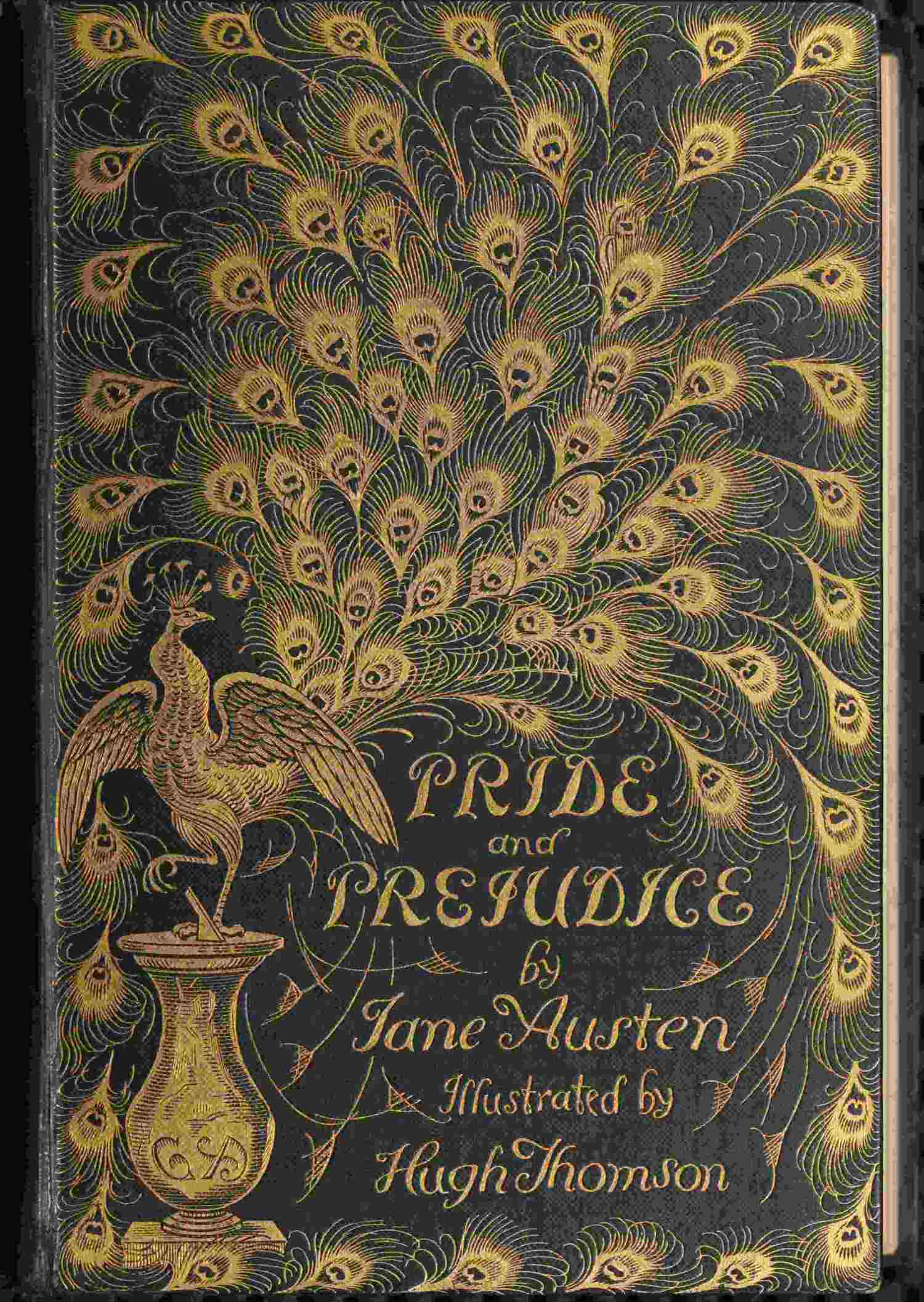
Pride and Prejudice
by Jane Austen
Read by Elizabeth Klett · LibriVox
Pride and Prejudice by Jane Austen is a beloved novel about love, marriage, social class, and the importance of overcoming first impressions. The story follows Elizabeth Bennet, an intelligent and independent young woman whose lively wit… Read more
All chapters (60)
Jump to a chapter; the recording moves with you.
- 1. Mr. Bennet was among the earliest of those who waited on Mr. Bingley. He had always intended to visit him, though to the last always assuring his wife that he should not go; and till the evening after the visit was paid she had no knowledge of it. It was then disclosed in the following manner. Observing his second daughter employed in trimming a hat, he suddenly addressed her with,--
- 2. Not all that Mrs. Bennet, however, with the assistance of her five daughters, could ask on the subject, was sufficient to draw from her husband any satisfactory description of Mr. Bingley. They attacked him in various ways, with barefaced questions, ingenious suppositions, and distant surmises; but he eluded the skill of them all; and they were at last obliged to accept the second-hand intelligence of their neighbour, Lady Lucas. Her report was highly favourable. Sir William had been delighted with him. He was quite young, wonderfully handsome, extremely agreeable, and, to crown the whole, he meant to be at the next assembly with a large party. Nothing could be more delightful! To be fond of dancing was a certain step towards falling in love; and very lively hopes of Mr. Bingley’s heart were entertained.
- 3. When Jane and Elizabeth were alone, the former, who had been cautious in her praise of Mr. Bingley before, expressed to her sister how very much she admired him.
- 4. Within a short walk of Longbourn lived a family with whom the Bennets were particularly intimate. Sir William Lucas had been formerly in trade in Meryton, where he had made a tolerable fortune, and risen to the honour of knighthood by an address to the king during his mayoralty. The distinction had, perhaps, been felt too strongly. It had given him a disgust to his business and to his residence in a small market town; and, quitting them both, he had removed with his family to a house about a mile from Meryton, denominated from that period Lucas Lodge; where he could think with pleasure of his own importance, and, unshackled by business, occupy himself solely in being civil to all the world. For, though elated by his rank, it did not render him supercilious; on the contrary, he was all attention to everybody. By nature inoffensive, friendly, and obliging, his presentation at St. James’s had made him courteous.
- 5. The ladies of Longbourn soon waited on those of Netherfield. The visit was returned in due form. Miss Bennet’s pleasing manners grew on the good-will of Mrs. Hurst and Miss Bingley; and though the mother was found to be intolerable, and the younger sisters not worth speaking to, a wish of being better acquainted with _them_ was expressed towards the two eldest. By Jane this attention was received with the greatest pleasure; but Elizabeth still saw superciliousness in their treatment of everybody, hardly excepting even her sister, and could not like them; though their kindness to Jane, such as it was, had a value, as arising, in all probability, from the influence of their brother’s admiration. It was generally evident, whenever they met, that he _did_ admire her; and to _her_ it was equally evident that Jane was yielding to the preference which she had begun to entertain for him from the first, and was in a way to be very much in love; but she considered with pleasure that it was not likely to be discovered by the world in general, since Jane united with great strength of feeling, a composure of temper and an uniform cheerfulness of manner, which would guard her from the suspicions of the impertinent. She mentioned this to her friend, Miss Lucas.
- 6. Mr. Bennet’s property consisted almost entirely in an estate of two thousand a year, which, unfortunately for his daughters, was entailed, in default of heirs male, on a distant relation; and their mother’s fortune, though ample for her situation in life, could but ill supply the deficiency of his. Her father had been an attorney in Meryton, and had left her four thousand pounds.
- 7. At five o’clock the two ladies retired to dress, and at half-past six Elizabeth was summoned to dinner. To the civil inquiries which then poured in, and amongst which she had the pleasure of distinguishing the much superior solicitude of Mr. Bingley, she could not make a very favourable answer. Jane was by no means better. The sisters, on hearing this, repeated three or four times how much they were grieved, how shocking it was to have a bad cold, and how excessively they disliked being ill themselves; and then thought no more of the matter: and their indifference towards Jane, when not immediately before them, restored Elizabeth to the enjoyment of all her original dislike.
- 8. Elizabeth passed the chief of the night in her sister’s room, and in the morning had the pleasure of being able to send a tolerable answer to the inquiries which she very early received from Mr. Bingley by a housemaid, and some time afterwards from the two elegant ladies who waited on his sisters. In spite of this amendment, however, she requested to have a note sent to Longbourn, desiring her mother to visit Jane, and form her own judgment of her situation. The note was immediately despatched, and its contents as quickly complied with. Mrs. Bennet, accompanied by her two youngest girls, reached Netherfield soon after the family breakfast.
- 9. The day passed much as the day before had done. Mrs. Hurst and Miss Bingley had spent some hours of the morning with the invalid, who continued, though slowly, to mend; and, in the evening, Elizabeth joined their party in the drawing-room. The loo table, however, did not appear. Mr. Darcy was writing, and Miss Bingley, seated near him, was watching the progress of his letter, and repeatedly calling off his attention by messages to his sister. Mr. Hurst and Mr. Bingley were at piquet, and Mrs. Hurst was observing their game.
- 10. When the ladies removed after dinner Elizabeth ran up to her sister, and seeing her well guarded from cold, attended her into the drawing-room, where she was welcomed by her two friends with many professions of pleasure; and Elizabeth had never seen them so agreeable as they were during the hour which passed before the gentlemen appeared. Their powers of conversation were considerable. They could describe an entertainment with accuracy, relate an anecdote with humour, and laugh at their acquaintance with spirit.
- 11. In consequence of an agreement between the sisters, Elizabeth wrote the next morning to her mother, to beg that the carriage might be sent for them in the course of the day. But Mrs. Bennet, who had calculated on her daughters remaining at Netherfield till the following Tuesday, which would exactly finish Jane’s week, could not bring herself to receive them with pleasure before. Her answer, therefore, was not propitious, at least not to Elizabeth’s wishes, for she was impatient to get home. Mrs. Bennet sent them word that they could not possibly have the carriage before Tuesday; and in her postscript it was added, that if Mr. Bingley and his sister pressed them to stay longer, she could spare them very well. Against staying longer, however, Elizabeth was positively resolved--nor did she much expect it would be asked; and fearful, on the contrary, of being considered as intruding themselves needlessly long, she urged Jane to borrow Mr. Bingley’s carriage immediately, and at length it was settled that their original design of leaving Netherfield that morning should be mentioned, and the request made.
- 12. “I hope, my dear,” said Mr. Bennet to his wife, as they were at breakfast the next morning, “that you have ordered a good dinner to-day, because I have reason to expect an addition to our family party.”
- 13. During dinner, Mr. Bennet scarcely spoke at all; but when the servants were withdrawn, he thought it time to have some conversation with his guest, and therefore started a subject in which he expected him to shine, by observing that he seemed very fortunate in his patroness. Lady Catherine de Bourgh’s attention to his wishes, and consideration for his comfort, appeared very remarkable. Mr. Bennet could not have chosen better. Mr. Collins was eloquent in her praise. The subject elevated him to more than usual solemnity of manner; and with a most important aspect he protested that he had never in his life witnessed such behaviour in a person of rank--such affability and condescension, as he had himself experienced from Lady Catherine. She had been graciously pleased to approve of both the discourses which he had already had the honour of preaching before her. She had also asked him twice to dine at Rosings, and had sent for him only the Saturday before, to make up her pool of quadrille in the evening. Lady Catherine was reckoned proud by many people, he knew, but _he_ had never seen anything but affability in her. She had always spoken to him as she would to any other gentleman; she made not the smallest objection to his joining in the society of the neighbourhood, nor to his leaving his parish occasionally for a week or two to visit his relations. She had even condescended to advise him to marry as soon as he could, provided he chose with discretion; and had once paid him a visit in his humble parsonage, where she had perfectly approved all the alterations he had been making, and had even vouchsafed to suggest some herself,--some shelves in the closets upstairs.
- 14. Mr. Collins was not a sensible man, and the deficiency of nature had been but little assisted by education or society; the greatest part of his life having been spent under the guidance of an illiterate and miserly father; and though he belonged to one of the universities, he had merely kept the necessary terms without forming at it any useful acquaintance. The subjection in which his father had brought him up had given him originally great humility of manner; but it was now a good deal counteracted by the self-conceit of a weak head, living in retirement, and the consequential feelings of early and unexpected prosperity. A fortunate chance had recommended him to Lady Catherine de Bourgh when the living of Hunsford was vacant; and the respect which he felt for her high rank, and his veneration for her as his patroness, mingling with a very good opinion of himself, of his authority as a clergyman, and his right as a rector, made him altogether a mixture of pride and obsequiousness, self-importance and humility.
- 15. As no objection was made to the young people’s engagement with their aunt, and all Mr. Collins’s scruples of leaving Mr. and Mrs. Bennet for a single evening during his visit were most steadily resisted, the coach conveyed him and his five cousins at a suitable hour to Meryton; and the girls had the pleasure of hearing, as they entered the drawing-room, that Mr. Wickham had accepted their uncle’s invitation, and was then in the house.
- 16. Elizabeth related to Jane, the next day, what had passed between Mr. Wickham and herself. Jane listened with astonishment and concern: she knew not how to believe that Mr. Darcy could be so unworthy of Mr. Bingley’s regard; and yet it was not in her nature to question the veracity of a young man of such amiable appearance as Wickham. The possibility of his having really endured such unkindness was enough to interest all her tender feelings; and nothing therefore remained to be done but to think well of them both, to defend the conduct of each, and throw into the account of accident or mistake whatever could not be otherwise explained.
- 17. Till Elizabeth entered the drawing-room at Netherfield, and looked in vain for Mr. Wickham among the cluster of red coats there assembled, a doubt of his being present had never occurred to her. The certainty of meeting him had not been checked by any of those recollections that might not unreasonably have alarmed her. She had dressed with more than usual care, and prepared in the highest spirits for the conquest of all that remained unsubdued of his heart, trusting that it was not more than might be won in the course of the evening. But in an instant arose the dreadful suspicion of his being purposely omitted, for Mr. Darcy’s pleasure, in the Bingleys’ invitation to the officers; and though this was not exactly the case, the absolute fact of his absence was pronounced by his friend Mr. Denny, to whom Lydia eagerly applied, and who told them that Wickham had been obliged to go to town on business the day before, and was not yet returned; adding, with a significant smile,--
- 18. The next day opened a new scene at Longbourn. Mr. Collins made his declaration in form. Having resolved to do it without loss of time, as his leave of absence extended only to the following Saturday, and having no feelings of diffidence to make it distressing to himself even at the moment, he set about it in a very orderly manner, with all the observances which he supposed a regular part of the business. On finding Mrs. Bennet, Elizabeth, and one of the younger girls together, soon after breakfast, he addressed the mother in these words,--
- 19. Mr. Collins was not left long to the silent contemplation of his successful love; for Mrs. Bennet, having dawdled about in the vestibule to watch for the end of the conference, no sooner saw Elizabeth open the door and with quick step pass her towards the staircase, than she entered the breakfast-room, and congratulated both him and herself in warm terms on the happy prospect of their nearer connection. Mr. Collins received and returned these felicitations with equal pleasure, and then proceeded to relate the particulars of their interview, with the result of which he trusted he had every reason to be satisfied, since the refusal which his cousin had steadfastly given him would naturally flow from her bashful modesty and the genuine delicacy of her character.
- 20. The discussion of Mr. Collins’s offer was now nearly at an end, and Elizabeth had only to suffer from the uncomfortable feelings necessarily attending it, and occasionally from some peevish allusion of her mother. As for the gentleman himself, _his_ feelings were chiefly expressed, not by embarrassment or dejection, or by trying to avoid her, but by stiffness of manner and resentful silence. He scarcely ever spoke to her; and the assiduous attentions which he had been so sensible of himself were transferred for the rest of the day to Miss Lucas, whose civility in listening to him was a seasonable relief to them all, and especially to her friend.
- 21. The Bennets were engaged to dine with the Lucases; and again, during the chief of the day, was Miss Lucas so kind as to listen to Mr. Collins. Elizabeth took an opportunity of thanking her. “It keeps him in good humour,” said she, “and I am more obliged to you than I can express.”
- 22. Elizabeth was sitting with her mother and sisters, reflecting on what she had heard, and doubting whether she was authorized to mention it, when Sir William Lucas himself appeared, sent by his daughter to announce her engagement to the family. With many compliments to them, and much self-gratulation on the prospect of a connection between the houses, he unfolded the matter,--to an audience not merely wondering, but incredulous; for Mrs. Bennet, with more perseverance than politeness, protested he must be entirely mistaken; and Lydia, always unguarded and often uncivil, boisterously exclaimed,--
- 23. Miss Bingley’s letter arrived, and put an end to doubt. The very first sentence conveyed the assurance of their being all settled in London for the winter, and concluded with her brother’s regret at not having had time to pay his respects to his friends in Hertfordshire before he left the country.
- 24. After a week spent in professions of love and schemes of felicity, Mr. Collins was called from his amiable Charlotte by the arrival of Saturday. The pain of separation, however, might be alleviated on his side by preparations for the reception of his bride, as he had reason to hope, that shortly after his next return into Hertfordshire, the day would be fixed that was to make him the happiest of men. He took leave of his relations at Longbourn with as much solemnity as before; wished his fair cousins health and happiness again, and promised their father another letter of thanks.
- 25. Mrs. Gardiner’s caution to Elizabeth was punctually and kindly given on the first favourable opportunity of speaking to her alone: after honestly telling her what she thought, she thus went on:--
- 26. With no greater events than these in the Longbourn family, and otherwise diversified by little beyond the walks to Meryton, sometimes dirty and sometimes cold, did January and February pass away. March was to take Elizabeth to Hunsford. She had not at first thought very seriously of going thither; but Charlotte, she soon found, was depending on the plan, and she gradually learned to consider it herself with greater pleasure as well as greater certainty. Absence had increased her desire of seeing Charlotte again, and weakened her disgust of Mr. Collins. There was novelty in the scheme; and as, with such a mother and such uncompanionable sisters, home could not be faultless, a little change was not unwelcome for its own sake. The journey would, moreover, give her a peep at Jane; and, in short, as the time drew near, she would have been very sorry for any delay. Everything, however, went on smoothly, and was finally settled according to Charlotte’s first sketch. She was to accompany Sir William and his second daughter. The improvement of spending a night in London was added in time, and the plan became as perfect as plan could be.
- 27. Every object in the next day’s journey was new and interesting to Elizabeth; and her spirits were in a state of enjoyment; for she had seen her sister looking so well as to banish all fear for her health, and the prospect of her northern tour was a constant source of delight.
- 28. Mr. Collins’s triumph, in consequence of this invitation, was complete. The power of displaying the grandeur of his patroness to his wondering visitors, and of letting them see her civility towards himself and his wife, was exactly what he had wished for; and that an opportunity of doing it should be given so soon was such an instance of Lady Catherine’s condescension as he knew not how to admire enough.
- 29. Sir William stayed only a week at Hunsford; but his visit was long enough to convince him of his daughter’s being most comfortably settled, and of her possessing such a husband and such a neighbour as were not often met with. While Sir William was with them, Mr. Collins devoted his mornings to driving him out in his gig, and showing him the country: but when he went away, the whole family returned to their usual employments, and Elizabeth was thankful to find that they did not see more of her cousin by the alteration; for the chief of the time between breakfast and dinner was now passed by him either at work in the garden, or in reading and writing, and looking out of window in his own book room, which fronted the road. The room in which the ladies sat was backwards. Elizabeth at first had rather wondered that Charlotte should not prefer the dining parlour for common use; it was a better sized room, and had a pleasanter aspect: but she soon saw that her friend had an excellent reason for what she did, for Mr. Collins would undoubtedly have been much less in his own apartment had they sat in one equally lively; and she gave Charlotte credit for the arrangement.
- 30. Colonel Fitzwilliam’s manners were very much admired at the Parsonage, and the ladies all felt that he must add considerably to the pleasure of their engagements at Rosings. It was some days, however, before they received any invitation thither, for while there were visitors in the house they could not be necessary; and it was not till Easter-day, almost a week after the gentlemen’s arrival, that they were honoured by such an attention, and then they were merely asked on leaving church to come there in the evening. For the last week they had seen very little of either Lady Catherine or her daughter. Colonel Fitzwilliam had called at the Parsonage more than once during the time, but Mr. Darcy they had only seen at church.
- 31. Elizabeth was sitting by herself the next morning, and writing to Jane, while Mrs. Collins and Maria were gone on business into the village, when she was startled by a ring at the door, the certain signal of a visitor. As she had heard no carriage, she thought it not unlikely to be Lady Catherine; and under that apprehension was putting away her half-finished letter, that she might escape all impertinent questions, when the door opened, and to her very great surprise Mr. Darcy, and Mr. Darcy only, entered the room.
- 32. More than once did Elizabeth, in her ramble within the park, unexpectedly meet Mr. Darcy. She felt all the perverseness of the mischance that should bring him where no one else was brought; and, to prevent its ever happening again, took care to inform him, at first, that it was a favourite haunt of hers. How it could occur a second time, therefore, was very odd! Yet it did, and even the third. It seemed like wilful ill-nature, or a voluntary penance; for on these occasions it was not merely a few formal inquiries and an awkward pause and then away, but he actually thought it necessary to turn back and walk with her. He never said a great deal, nor did she give herself the trouble of talking or of listening much; but it struck her in the course of their third encounter that he was asking some odd unconnected questions--about her pleasure in being at Hunsford, her love of solitary walks, and her opinion of Mr. and Mrs. Collins’s happiness; and that in speaking of Rosings, and her not perfectly understanding the house, he seemed to expect that whenever she came into Kent again she would be staying _there_ too. His words seemed to imply it. Could he have Colonel Fitzwilliam in his thoughts? She supposed, if he meant anything, he must mean an allusion to what might arise in that quarter. It distressed her a little, and she was quite glad to find herself at the gate in the pales opposite the Parsonage.
- 33. When they were gone, Elizabeth, as if intending to exasperate herself as much as possible against Mr. Darcy, chose for her employment the examination of all the letters which Jane had written to her since her being in Kent. They contained no actual complaint, nor was there any revival of past occurrences, or any communication of present suffering. But in all, and in almost every line of each, there was a want of that cheerfulness which had been used to characterize her style, and which, proceeding from the serenity of a mind at ease with itself, and kindly disposed towards everyone, had been scarcely ever clouded. Elizabeth noticed every sentence conveying the idea of uneasiness, with an attention which it had hardly received on the first perusal. Mr. Darcy’s shameful boast of what misery he had been able to inflict gave her a keener sense of her sister’s sufferings. It was some consolation to think that his visit to Rosings was to end on the day after the next, and a still greater that in less than a fortnight she should herself be with Jane again, and enabled to contribute to the recovery of her spirits, by all that affection could do.
- 34. Elizabeth awoke the next morning to the same thoughts and meditations which had at length closed her eyes. She could not yet recover from the surprise of what had happened: it was impossible to think of anything else; and, totally indisposed for employment, she resolved soon after breakfast to indulge herself in air and exercise. She was proceeding directly to her favourite walk, when the recollection of Mr. Darcy’s sometimes coming there stopped her, and instead of entering the park, she turned up the lane which led her farther from the turnpike road. The park paling was still the boundary on one side, and she soon passed one of the gates into the ground.
- 35. Elizabeth, when Mr. Darcy gave her the letter, did not expect it to contain a renewal of his offers, she had formed no expectation at all of its contents. But such as they were, it may be well supposed how eagerly she went through them, and what a contrariety of emotion they excited. Her feelings as she read were scarcely to be defined. With amazement did she first understand that he believed any apology to be in his power; and steadfastly was she persuaded, that he could have no explanation to give, which a just sense of shame would not conceal. With a strong prejudice against everything he might say, she began his account of what had happened at Netherfield. She read with an eagerness which hardly left her power of comprehension; and from impatience of knowing what the next sentence might bring, was incapable of attending to the sense of the one before her eyes. His belief of her sister’s insensibility she instantly resolved to be false; and his account of the real, the worst objections to the match, made her too angry to have any wish of doing him justice. He expressed no regret for what he had done which satisfied her; his style was not penitent, but haughty. It was all pride and insolence.
- 36. The two gentlemen left Rosings the next morning; and Mr. Collins having been in waiting near the lodges, to make them his parting obeisance, was able to bring home the pleasing intelligence of their appearing in very good health, and in as tolerable spirits as could be expected, after the melancholy scene so lately gone through at Rosings. To Rosings he then hastened to console Lady Catherine and her daughter; and on his return brought back, with great satisfaction, a message from her Ladyship, importing that she felt herself so dull as to make her very desirous of having them all to dine with her.
- 37. On Saturday morning Elizabeth and Mr. Collins met for breakfast a few minutes before the others appeared; and he took the opportunity of paying the parting civilities which he deemed indispensably necessary.
- 38. It was the second week in May, in which the three young ladies set out together from Gracechurch Street for the town of ----, in Hertfordshire; and, as they drew near the appointed inn where Mr. Bennet’s carriage was to meet them, they quickly perceived, in token of the coachman’s punctuality, both Kitty and Lydia looking out of a dining-room upstairs. These two girls had been above an hour in the place, happily employed in visiting an opposite milliner, watching the sentinel on guard, and dressing a salad and cucumber.
- 39. Elizabeth’s impatience to acquaint Jane with what had happened could no longer be overcome; and at length resolving to suppress every particular in which her sister was concerned, and preparing her to be surprised, she related to her the next morning the chief of the scene between Mr. Darcy and herself.
- 40. The first week of their return was soon gone. The second began. It was the last of the regiment’s stay in Meryton, and all the young ladies in the neighbourhood were drooping apace. The dejection was almost universal. The elder Miss Bennets alone were still able to eat, drink, and sleep, and pursue the usual course of their employments. Very frequently were they reproached for this insensibility by Kitty and Lydia, whose own misery was extreme, and who could not comprehend such hard-heartedness in any of the family.
- 41. Had Elizabeth’s opinion been all drawn from her own family, she could not have formed a very pleasing picture of conjugal felicity or domestic comfort. Her father, captivated by youth and beauty, and that appearance of good-humour which youth and beauty generally give, had married a woman whose weak understanding and illiberal mind had very early in their marriage put an end to all real affection for her. Respect, esteem, and confidence had vanished for ever; and all his views of domestic happiness were overthrown. But Mr. Bennet was not of a disposition to seek comfort for the disappointment which his own imprudence had brought on in any of those pleasures which too often console the unfortunate for their folly or their vice. He was fond of the country and of books; and from these tastes had arisen his principal enjoyments. To his wife he was very little otherwise indebted than as her ignorance and folly had contributed to his amusement. This is not the sort of happiness which a man would in general wish to owe to his wife; but where other powers of entertainment are wanting, the true philosopher will derive benefit from such as are given.
- 42. Elizabeth, as they drove along, watched for the first appearance of Pemberley Woods with some perturbation; and when at length they turned in at the lodge, her spirits were in a high flutter.
- 43. Elizabeth had settled it that Mr. Darcy would bring his sister to visit her the very day after her reaching Pemberley; and was, consequently, resolved not to be out of sight of the inn the whole of that morning. But her conclusion was false; for on the very morning after their own arrival at Lambton these visitors came. They had been walking about the place with some of their new friends, and were just returned to the inn to dress themselves for dining with the same family, when the sound of a carriage drew them to a window, and they saw a gentleman and lady in a curricle driving up the street. Elizabeth, immediately recognizing the livery, guessed what it meant, and imparted no small degree of surprise to her relations, by acquainting them with the honour which she expected. Her uncle and aunt were all amazement; and the embarrassment of her manner as she spoke, joined to the circumstance itself, and many of the circumstances of the preceding day, opened to them a new idea on the business. Nothing had ever suggested it before, but they now felt that there was no other way of accounting for such attentions from such a quarter than by supposing a partiality for their niece. While these newly-born notions were passing in their heads, the perturbation of Elizabeth’s feelings was every moment increasing. She was quite amazed at her own discomposure; but, amongst other causes of disquiet, she dreaded lest the partiality of the brother should have said too much in her favour; and, more than commonly anxious to please, she naturally suspected that every power of pleasing would fail her.
- 44. Convinced as Elizabeth now was that Miss Bingley’s dislike of her had originated in jealousy, she could not help feeling how very unwelcome her appearance at Pemberley must be to her, and was curious to know with how much civility on that lady’s side the acquaintance would now be renewed.
- 45. Elizabeth had been a good deal disappointed in not finding a letter from Jane on their first arrival at Lambton; and this disappointment had been renewed on each of the mornings that had now been spent there; but on the third her repining was over, and her sister justified, by the receipt of two letters from her at once, on one of which was marked that it had been mis-sent elsewhere. Elizabeth was not surprised at it, as Jane had written the direction remarkably ill.
- 46. “I have been thinking it over again, Elizabeth,” said her uncle, as they drove from the town; “and really, upon serious consideration, I am much more inclined than I was to judge as your eldest sister does of the matter. It appears to me so very unlikely that any young man should form such a design against a girl who is by no means unprotected or friendless, and who was actually staying in his Colonel’s family, that I am strongly inclined to hope the best. Could he expect that her friends would not step forward? Could he expect to be noticed again by the regiment, after such an affront to Colonel Forster? His temptation is not adequate to the risk.”
- 47. The whole party were in hopes of a letter from Mr. Bennet the next morning, but the post came in without bringing a single line from him. His family knew him to be, on all common occasions, a most negligent and dilatory correspondent; but at such a time they had hoped for exertion. They were forced to conclude, that he had no pleasing intelligence to send; but even of _that_ they would have been glad to be certain. Mr. Gardiner had waited only for the letters before he set off.
- 48. Two days after Mr. Bennet’s return, as Jane and Elizabeth were walking together in the shrubbery behind the house, they saw the housekeeper coming towards them, and concluding that she came to call them to their mother, went forward to meet her; but instead of the expected summons, when they approached her, she said to Miss Bennet, “I beg your pardon, madam, for interrupting you, but I was in hopes you might have got some good news from town, so I took the liberty of coming to ask.”
- 49. Mr. Bennet had very often wished, before this period of his life, that, instead of spending his whole income, he had laid by an annual sum, for the better provision of his children, and of his wife, if she survived him. He now wished it more than ever. Had he done his duty in that respect, Lydia need not have been indebted to her uncle for whatever of honour or credit could now be purchased for her. The satisfaction of prevailing on one of the most worthless young men in Great Britain to be her husband might then have rested in its proper place.
- 50. Their sister’s wedding-day arrived; and Jane and Elizabeth felt for her probably more than she felt for herself. The carriage was sent to meet them at----, and they were to return in it by dinnertime. Their arrival was dreaded by the elder Miss Bennets--and Jane more especially, who gave Lydia the feelings which would have attended herself, had _she_ been the culprit, and was wretched in the thought of what her sister must endure.
- 51. Elizabeth had the satisfaction of receiving an answer to her letter as soon as she possibly could. She was no sooner in possession of it, than hurrying into the little copse, where she was least likely to be interrupted, she sat down on one of the benches, and prepared to be happy; for the length of the letter convinced her that it did not contain a denial.
- 52. Mr. Wickham was so perfectly satisfied with this conversation, that he never again distressed himself, or provoked his dear sister Elizabeth, by introducing the subject of it; and she was pleased to find that she had said enough to keep him quiet.
- 53. As soon as they were gone, Elizabeth walked out to recover her spirits; or, in other words, to dwell without interruption on those subjects which must deaden them more. Mr. Darcy’s behaviour astonished and vexed her.
- 54. A few days after this visit, Mr. Bingley called again, and alone. His friend had left him that morning for London, but was to return home in ten days’ time. He sat with them above an hour, and was in remarkably good spirits. Mrs. Bennet invited him to dine with them; but, with many expressions of concern, he confessed himself engaged elsewhere.
- 55. One morning, about a week after Bingley’s engagement with Jane had been formed, as he and the females of the family were sitting together in the dining-room, their attention was suddenly drawn to the window by the sound of a carriage; and they perceived a chaise and four driving up the lawn. It was too early in the morning for visitors; and besides, the equipage did not answer to that of any of their neighbours. The horses were post; and neither the carriage, nor the livery of the servant who preceded it, were familiar to them. As it was certain, however, that somebody was coming, Bingley instantly prevailed on Miss Bennet to avoid the confinement of such an intrusion, and walk away with him into the shrubbery. They both set off; and the conjectures of the remaining three continued, though with little satisfaction, till the door was thrown open, and their visitor entered. It was Lady Catherine de Bourgh.
- 56. The discomposure of spirits which this extraordinary visit threw Elizabeth into could not be easily overcome; nor could she for many hours learn to think of it less than incessantly. Lady Catherine, it appeared, had actually taken the trouble of this journey from Rosings for the sole purpose of breaking off her supposed engagement with Mr. Darcy. It was a rational scheme, to be sure! but from what the report of their engagement could originate, Elizabeth was at a loss to imagine; till she recollected that _his_ being the intimate friend of Bingley, and _her_ being the sister of Jane, was enough, at a time when the expectation of one wedding made everybody eager for another, to supply the idea. She had not herself forgotten to feel that the marriage of her sister must bring them more frequently together. And her neighbours at Lucas Lodge, therefore, (for through their communication with the Collinses, the report, she concluded, had reached Lady Catherine,) had only set _that_ down as almost certain and immediate which _she_ had looked forward to as possible at some future time.
- 57. Instead of receiving any such letter of excuse from his friend, as Elizabeth half expected Mr. Bingley to do, he was able to bring Darcy with him to Longbourn before many days had passed after Lady Catherine’s visit. The gentlemen arrived early; and, before Mrs. Bennet had time to tell him of their having seen his aunt, of which her daughter sat in momentary dread, Bingley, who wanted to be alone with Jane, proposed their all walking out. It was agreed to. Mrs. Bennet was not in the habit of walking, Mary could never spare time, but the remaining five set off together. Bingley and Jane, however, soon allowed the others to outstrip them. They lagged behind, while Elizabeth, Kitty, and Darcy were to entertain each other. Very little was said by either; Kitty was too much afraid of him to talk; Elizabeth was secretly forming a desperate resolution; and, perhaps, he might be doing the same.
- 58. “My dear Lizzy, where can you have been walking to?” was a question which Elizabeth received from Jane as soon as she entered the room, and from all the others when they sat down to table. She had only to say in reply, that they had wandered about till she was beyond her own knowledge. She coloured as she spoke; but neither that, nor anything else, awakened a suspicion of the truth.
- 59. Elizabeth’s spirits soon rising to playfulness again, she wanted Mr. Darcy to account for his having ever fallen in love with her. “How could you begin?” said she. “I can comprehend your going on charmingly, when you had once made a beginning; but what could set you off in the first place?”
- 60. Happy for all her maternal feelings was the day on which Mrs. Bennet got rid of her two most deserving daughters. With what delighted pride she afterwards visited Mrs. Bingley, and talked of Mrs. Darcy, may be guessed. I wish I could say, for the sake of her family, that the accomplishment of her earnest desire in the establishment of so many of her children produced so happy an effect as to make her a sensible, amiable, well-informed woman for the rest of her life; though, perhaps, it was lucky for her husband, who might not have relished domestic felicity in so unusual a form, that she still was occasionally nervous and invariably silly.
Transcript 17. Till Elizabeth entered the drawing-room at Netherfield, and looked in vain for Mr. Wickham among the cluster of red coats there assembled, a doubt of his being present had never occurred to her. The certainty of meeting him had not been checked by any of those recollections that might not unreasonably have alarmed her. She had dressed with more than usual care, and prepared in the highest spirits for the conquest of all that remained unsubdued of his heart, trusting that it was not more than might be won in the course of the evening. But in an instant arose the dreadful suspicion of his being purposely omitted, for Mr. Darcy’s pleasure, in the Bingleys’ invitation to the officers; and though this was not exactly the case, the absolute fact of his absence was pronounced by his friend Mr. Denny, to whom Lydia eagerly applied, and who told them that Wickham had been obliged to go to town on business the day before, and was not yet returned; adding, with a significant smile,--
The recording is in 1. Mr. Bennet was among the earliest of those who waited on Mr. Bingley. He had always intended to visit him, though to the last always assuring his wife that he should not go; and till the evening after the visit was paid she had no knowledge of it. It was then disclosed in the following manner. Observing his second daughter employed in trimming a hat, he suddenly addressed her with,--. Open that chapter
Read by Elizabeth Klett · LibriVox
“I do not imagine his business would have called him away just now, if he had not wished to avoid a certain gentleman here.”
This part of his intelligence, though unheard by Lydia, was caught by Elizabeth; and, as it assured her that Darcy was not less answerable for Wickham’s absence than if her first surmise had been just, every feeling of displeasure against the former was so sharpened by immediate disappointment, that she could hardly reply with tolerable civility to the polite inquiries which he directly afterwards approached to make. Attention, forbearance, patience with Darcy, was injury to Wickham. She was resolved against any sort of conversation with him, and turned away with a degree of ill-humour which she could not wholly surmount even in speaking to Mr. Bingley, whose blind partiality provoked her.
But Elizabeth was not formed for ill-humour; and though every prospect of her own was destroyed for the evening, it could not dwell long on her spirits; and, having told all her griefs to Charlotte Lucas, whom she had not seen for a week, she was soon able to make a voluntary transition to the oddities of her cousin, and to point him out to her particular notice. The two first dances, however, brought a return of distress: they were dances of mortification. Mr. Collins, awkward and solemn, apologizing instead of attending, and often moving wrong without being aware of it, gave her all the shame and misery which a disagreeable partner for a couple of dances can give. The moment of her release from him was ecstasy.
She danced next with an officer, and had the refreshment of talking of Wickham, and of hearing that he was universally liked. When those dances were over, she returned to Charlotte Lucas, and was in conversation with her, when she found herself suddenly addressed by Mr. Darcy, who took her so much by surprise in his application for her hand, that, without knowing what she did, she accepted him. He walked away again immediately, and she was left to fret over her own want of presence of mind: Charlotte tried to console her.
“I dare say you will find him very agreeable.”
“Heaven forbid! would be the greatest misfortune of all! To find a man agreeable whom one is determined to hate! Do not wish me such an evil.”
When the dancing recommenced, however, and Darcy approached to claim her hand, Charlotte could not help cautioning her, in a whisper, not to be a simpleton, and allow her fancy for Wickham to make her appear unpleasant in the eyes of a man often times his consequence. Elizabeth made no answer, and took her place in the set, amazed at the dignity to which she was arrived in being allowed to stand opposite to Mr. Darcy, and reading in her neighbours’ looks their equal amazement in beholding it. They stood for some time without speaking a word; and she began to imagine that their silence was to last through the two dances, and, at first, was resolved not to break it; till suddenly fancying that it would be the greater punishment to her partner to oblige him to talk, she made some slight observation on the dance. He replied, and was again silent. After a pause of some minutes, she addressed him a second time, with--
“It is turn to say something now, Mr. Darcy. talked about the dance, and ought to make some kind of remark on the size of the room, or the number of couples.”
He smiled, and assured her that whatever she wished him to say should be said.
“Very well; that reply will do for the present. Perhaps, by-and-by, I may observe that private balls are much pleasanter than public ones; but we may be silent.”
“Do you talk by rule, then, while you are dancing?”
“Sometimes. One must speak a little, you know. It would look odd to be entirely silent for half an hour together; and yet, for the advantage of , conversation ought to be so arranged as that they may have the trouble of saying as little as possible.”
“Are you consulting your own feelings in the present case, or do you imagine that you are gratifying mine?”
“Both,” replied Elizabeth archly; “for I have always seen a great similarity in the turn of our minds. We are each of an unsocial, taciturn disposition, unwilling to speak, unless we expect to say something that will amaze the whole room, and be handed down to posterity with all the of a proverb.”
“This is no very striking resemblance of your own character, I am sure,” said he. “How near it may be to , I cannot pretend to say. think it a faithful portrait, undoubtedly.”
“I must not decide on my own performance.”
He made no answer; and they were again silent till they had gone down the dance, when he asked her if she and her sisters did not very often walk to Meryton. She answered in the affirmative; and, unable to resist the temptation, added, “When you met us there the other day, we had just been forming a new acquaintance.”
The effect was immediate. A deeper shade of overspread his features, but he said not a word; and Elizabeth, though blaming herself for her own weakness, could not go on. At length Darcy spoke, and in a constrained manner said,--
“Mr. Wickham is blessed with such happy manners as may insure his friends; whether he may be equally capable of them, is less certain.”
“He has been so unlucky as to lose your friendship,” replied Elizabeth, with emphasis, “and in a manner which he is likely to suffer from all his life.”
Darcy made no answer, and seemed desirous of changing the subject. At that moment Sir William Lucas appeared close to them, meaning to pass through the set to the other side of the room; but, on perceiving Mr. Darcy, he stopped, with a bow of superior courtesy, to compliment him on his dancing and his partner.
“I have been most highly gratified, indeed, my dear sir; such very superior dancing is not often seen. It is evident that you belong to the first circles. Allow me to say, however, that your fair partner does not disgrace you: and that I must hope to have this pleasure often repeated, especially when a certain desirable event, my dear Miss Eliza (glancing at her sister and Bingley), shall take place. What congratulations will then flow in! I appeal to Mr. Darcy;--but let me not interrupt you, sir. You will not thank me for detaining you from the bewitching converse of that young lady, whose bright eyes are also upbraiding me.”
]
The latter part of this address was scarcely heard by Darcy; but Sir William’s allusion to his friend seemed to strike him forcibly, and his eyes were directed, with a very serious expression, towards Bingley and Jane, who were dancing together. Recovering himself, however, shortly, he turned to his partner, and said,--
“Sir William’s interruption has made me forget what we were talking of.”
“I do not think we were speaking at all. Sir William could not have interrupted any two people in the room who had less to say for themselves. We have tried two or three subjects already without success, and what we are to talk of next I cannot imagine.”
“What think you of books?” said he, smiling.
“Books--oh no!--I am sure we never read the same, or not with the same feelings.”
“I am sorry you think so; but if that be the case, there can at least be no want of subject. We may compare our different opinions.”
“No--I cannot talk of books in a ball-room; my head is always full of something else.”
“The always occupies you in such scenes--does it?” said he, with a look of doubt.
“Yes, always,” she replied, without knowing what she said; for her thoughts had wandered far from the subject, as soon afterwards appeared by her suddenly exclaiming, “I remember hearing you once say, Mr. Darcy, that you hardly ever forgave;--that your resentment, once created, was unappeasable. You are very cautious, I suppose, as to its ?”
“I am,” said he, with a firm voice.
“And never allow yourself to be blinded by prejudice?”
“I hope not.”
“It is particularly incumbent on those who never change their opinion, to be secure of judging properly at first.”
“May I ask to what these questions tend?”
“Merely to the illustration of character,” said she, endeavouring to shake off her gravity. “I am trying to make it out.”
“And what is your success?”
She shook her head. “I do not get on at all. I hear such different accounts of you as puzzle me exceedingly.”
“I can readily believe,” answered he, gravely, “that reports may vary greatly with respect to me; and I could wish, Miss Bennet, that you were not to sketch my character at the present moment, as there is reason to fear that the performance would reflect no credit on either.”
“But if I do not take your likeness now, I may never have another opportunity.”
“I would by no means suspend any pleasure of yours,” he coldly replied. She said no more, and they went down the other dance and parted in silence; on each side dissatisfied, though not to an equal degree; for in Darcy’s breast there was a tolerably powerful feeling towards her, which soon procured her pardon, and directed all his anger against another.
They had not long separated when Miss Bingley came towards her, and, with an expression of civil disdain, thus accosted her,--
“So, Miss Eliza, I hear you are quite delighted with George Wickham? Your sister has been talking to me about him, and asking me a thousand questions; and I find that the young man forgot to tell you, among his other communications, that he was the son of old Wickham, the late Mr. Darcy’s steward. Let me recommend you, however, as a friend, not to give implicit confidence to all his assertions; for, as to Mr. Darcy’s using him ill, it is perfectly false: for, on the contrary, he has been always remarkably kind to him, though George Wickham has treated Mr. Darcy in a most infamous manner. I do not know the particulars, but I know very well that Mr. Darcy is not in the least to blame; that he cannot bear to hear George Wickham mentioned; and that though my brother thought he could not well avoid including him in his invitation to the officers, he was excessively glad to find that he had taken himself out of the way. His coming into the country at all is a most insolent thing, indeed, and I wonder how he could presume to do it. I pity you, Miss Eliza, for this discovery of your favourite’s guilt; but really, considering his descent, one could not expect much better.”
“His guilt and his descent appear, by your account, to be the same,” said Elizabeth, angrily; “for I have heard you accuse him of nothing worse than of being the son of Mr. Darcy’s steward, and of , I can assure you, he informed me himself.”
“I beg your pardon,” replied Miss Bingley, turning away with a sneer. “Excuse my interference; it was kindly meant.”
“Insolent girl!” said Elizabeth to herself. “You are much mistaken if you expect to influence me by such a paltry attack as this. I see nothing in it but your own wilful ignorance and the malice of Mr. Darcy.” She then sought her eldest sister, who had undertaken to make inquiries on the same subject of Bingley. Jane met her with a smile of such sweet complacency, a glow of such happy expression, as sufficiently marked how well she was satisfied with the occurrences of the evening. Elizabeth instantly read her feelings; and, at that moment, solicitude for Wickham, resentment against his enemies, and everything else, gave way before the hope of Jane’s being in the fairest way for happiness.
“I want to know,” said she, with a countenance no less smiling than her sister’s, “what you have learnt about Mr. Wickham. But perhaps you have been too pleasantly engaged to think of any third person, in which case you may be sure of my pardon.”
“No,” replied Jane, “I have not forgotten him; but I have nothing satisfactory to tell you. Mr. Bingley does not know the whole of his history, and is quite ignorant of the circumstances which have principally offended Mr. Darcy; but he will vouch for the good conduct, the probity and honour, of his friend, and is perfectly convinced that Mr. Wickham has deserved much less attention from Mr. Darcy than he has received; and I am sorry to say that by his account, as well as his sister’s, Mr. Wickham is by no means a respectable young man. I am afraid he has been very imprudent, and has deserved to lose Mr. Darcy’s regard.”
“Mr. Bingley does not know Mr. Wickham himself.”
“No; he never saw him till the other morning at Meryton.”
“This account then is what he has received from Mr. Darcy. I am perfectly satisfied. But what does he say of the living?”
“He does not exactly recollect the circumstances, though he has heard them from Mr. Darcy more than once, but he believes that it was left to him only.”
“I have not a doubt of Mr. Bingley’s sincerity,” said Elizabeth warmly, “but you must excuse my not being convinced by assurances only. Mr. Bingley’s defence of his friend was a very able one, I dare say; but since he is unacquainted with several parts of the story, and has learnt the rest from that friend himself, I shall venture still to think of both gentlemen as I did before.”
She then changed the discourse to one more gratifying to each, and on which there could be no difference of sentiment. Elizabeth listened with delight to the happy though modest hopes which Jane entertained of Bingley’s regard, and said all in her power to heighten her confidence in it. On their being joined by Mr. Bingley himself, Elizabeth withdrew to Miss Lucas; to whose inquiry after the pleasantness of her last partner she had scarcely replied, before Mr. Collins came up to them, and told her with great exultation, that he had just been so fortunate as to make a most important discovery.
“I have found out,” said he, “by a singular accident, that there is now in the room a near relation to my patroness. I happened to overhear the gentleman himself mentioning to the young lady who does the honours of this house the names of his cousin Miss De Bourgh, and of her mother, Lady Catherine. How wonderfully these sort of things occur! Who would have thought of my meeting with--perhaps--a nephew of Lady Catherine de Bourgh in this assembly! I am most thankful that the discovery is made in time for me to pay my respects to him, which I am now going to do, and trust he will excuse my not having done it before. My total ignorance of the connection must plead my apology.”
“You are not going to introduce yourself to Mr. Darcy?”
“Indeed I am. I shall entreat his pardon for not having done it earlier. I believe him to be Lady Catherine’s . It will be in my power to assure him that her Ladyship was quite well yesterday se’nnight.”
Elizabeth tried hard to dissuade him from such a scheme; assuring him that Mr. Darcy would consider his addressing him without introduction as an impertinent freedom, rather than a compliment to his aunt; that it was not in the least necessary there should be any notice on either side, and that if it were, it must belong to Mr. Darcy, the superior in consequence, to begin the acquaintance. Mr. Collins listened to her with the determined air of following his own inclination, and when she ceased speaking, replied thus,--
“My dear Miss Elizabeth, I have the highest opinion in the world of your excellent judgment in all matters within the scope of your understanding, but permit me to say that there must be a wide difference between the established forms of ceremony amongst the laity and those which regulate the clergy; for, give me leave to observe that I consider the clerical office as equal in point of dignity with the highest rank in the kingdom--provided that a proper humility of behaviour is at the same time maintained. You must, therefore, allow me to follow the dictates of my conscience on this occasion, which lead me to perform what I look on as a point of duty. Pardon me for neglecting to profit by your advice, which on every other subject shall be my constant guide, though in the case before us I consider myself more fitted by education and habitual study to decide on what is right than a young lady like yourself;” and with a low bow he left her to attack Mr. Darcy, whose reception of his advances she eagerly watched, and whose astonishment at being so addressed was very evident. Her cousin prefaced his speech with a solemn bow, and though she could not hear a word of it, she felt as if hearing it all, and saw in the motion of his lips the words “apology,” “Hunsford,” and “Lady Catherine de Bourgh.” It vexed her to see him expose himself to such a man. Mr. Darcy was eyeing him with unrestrained wonder; and when at last Mr. Collins allowed him to speak, replied with an air of distant civility. Mr. Collins, however, was not discouraged from speaking again, and Mr. Darcy’s contempt seemed abundantly increasing with the length of his second speech; and at the end of it he only made him a slight bow, and moved another way: Mr. Collins then returned to Elizabeth.
“I have no reason, I assure you,” said he, “to be dissatisfied with my reception. Mr. Darcy seemed much pleased with the attention. He answered me with the utmost civility, and even paid me the compliment of saying, that he was so well convinced of Lady Catherine’s discernment as to be certain she could never bestow a favour unworthily. It was really a very handsome thought. Upon the whole, I am much pleased with him.”
As Elizabeth had no longer any interest of her own to pursue, she turned her attention almost entirely on her sister and Mr. Bingley; and the train of agreeable reflections which her observations gave birth to made her perhaps almost as happy as Jane. She saw her in idea settled in that very house, in all the felicity which a marriage of true affection could bestow; and she felt capable, under such circumstances, of endeavouring even to like Bingley’s two sisters. Her mother’s thoughts she plainly saw were bent the same way, and she determined not to venture near her, lest she might hear too much. When they sat down to supper, therefore, she considered it a most unlucky perverseness which placed them within one of each other; and deeply was she vexed to find that her mother was talking to that one person (Lady Lucas) freely, openly, and of nothing else but of her expectation that Jane would be soon married to Mr. Bingley. It was an animating subject, and Mrs. Bennet seemed incapable of fatigue while enumerating the advantages of the match. His being such a charming young man, and so rich, and living but three miles from them, were the first points of self-gratulation; and then it was such a comfort to think how fond the two sisters were of Jane, and to be certain that they must desire the connection as much as she could do. It was, moreover, such a promising thing for her younger daughters, as Jane’s marrying so greatly must throw them in the way of other rich men; and, lastly, it was so pleasant at her time of life to be able to consign her single daughters to the care of their sister, that she might not be obliged to go into company more than she liked. It was necessary to make this circumstance a matter of pleasure, because on such occasions it is the etiquette; but no one was less likely than Mrs. Bennet to find comfort in staying at home at any period of her life. She concluded with many good wishes that Lady Lucas might soon be equally fortunate, though evidently and triumphantly believing there was no chance of it.
In vain did Elizabeth endeavour to check the rapidity of her mother’s words, or persuade her to describe her felicity in a less audible whisper; for to her inexpressible vexation she could perceive that the chief of it was overheard by Mr. Darcy, who sat opposite to them. Her mother only scolded her for being nonsensical.
“What is Mr. Darcy to me, pray, that I should be afraid of him? I am sure we owe him no such particular civility as to be obliged to say nothing may not like to hear.”
“For heaven’s sake, madam, speak lower. What advantage can it be to you to offend Mr. Darcy? You will never recommend yourself to his friend by so doing.”
Nothing that she could say, however, had any influence. Her mother would talk of her views in the same intelligible tone. Elizabeth blushed and blushed again with shame and vexation. She could not help frequently glancing her eye at Mr. Darcy, though every glance convinced her of what she dreaded; for though he was not always looking at her mother, she was convinced that his attention was invariably fixed by her. The expression of his face changed gradually from indignant contempt to a composed and steady gravity.
At length, however, Mrs. Bennet had no more to say; and Lady Lucas, who had been long yawning at the repetition of delights which she saw no likelihood of sharing, was left to the comforts of cold ham and chicken. Elizabeth now began to revive. But not long was the interval of tranquillity; for when supper was over, singing was talked of, and she had the mortification of seeing Mary, after very little entreaty, preparing to oblige the company. By many significant looks and silent entreaties did she endeavour to prevent such a proof of complaisance,--but in vain; Mary would not understand them; such an opportunity of exhibiting was delightful to her, and she began her song. Elizabeth’s eyes were fixed on her, with most painful sensations; and she watched her progress through the several stanzas with an impatience which was very ill rewarded at their close; for Mary, on receiving amongst the thanks of the table the hint of a hope that she might be prevailed on to favour them again, after the pause of half a minute began another. Mary’s powers were by no means fitted for such a display; her voice was weak, and her manner affected. Elizabeth was in agonies. She looked at Jane to see how she bore it; but Jane was very composedly talking to Bingley. She looked at his two sisters, and saw them making signs of derision at each other, and at Darcy, who continued, however, impenetrably grave. She looked at her father to entreat his interference, lest Mary should be singing all night. He took the hint, and, when Mary had finished her second song, said aloud,--
“That will do extremely well, child. You have delighted us long enough. Let the other young ladies have time to exhibit.”
Mary, though pretending not to hear, was somewhat disconcerted; and Elizabeth, sorry for her, and sorry for her father’s speech, was afraid her anxiety had done no good. Others of the party were now applied to.
“If I,” said Mr. Collins, “were so fortunate as to be able to sing, I should have great pleasure, I am sure, in obliging the company with an air; for I consider music as a very innocent diversion, and perfectly compatible with the profession of a clergyman. I do not mean, however, to assert that we can be justified in devoting too much of our time to music, for there are certainly other things to be attended to. The rector of a parish has much to do. In the first place, he must make such an agreement for tithes as may be beneficial to himself and not offensive to his patron. He must write his own sermons; and the time that remains will not be too much for his parish duties, and the care and improvement of his dwelling, which he cannot be excused from making as comfortable as possible. And I do not think it of light importance that he should have attentive and conciliatory manners towards everybody, especially towards those to whom he owes his preferment. I cannot acquit him of that duty; nor could I think well of the man who should omit an occasion of testifying his respect towards anybody connected with the family.” And with a bow to Mr. Darcy, he concluded his speech, which had been spoken so loud as to be heard by half the room. Many stared--many smiled; but no one looked more amused than Mr. Bennet himself, while his wife seriously commended Mr. Collins for having spoken so sensibly, and observed, in a half-whisper to Lady Lucas, that he was a remarkably clever, good kind of young man.
To Elizabeth it appeared, that had her family made an agreement to expose themselves as much as they could during the evening, it would have been impossible for them to play their parts with more spirit, or finer success; and happy did she think it for Bingley and her sister that some of the exhibition had escaped his notice, and that his feelings were not of a sort to be much distressed by the folly which he must have witnessed. That his two sisters and Mr. Darcy, however, should have such an opportunity of ridiculing her relations was bad enough; and she could not determine whether the silent contempt of the gentleman, or the insolent smiles of the ladies, were more intolerable.
The rest of the evening brought her little amusement. She was teased by Mr. Collins, who continued most perseveringly by her side; and though he could not prevail with her to dance with him again, put it out of her power to dance with others. In vain did she entreat him to stand up with somebody else, and offered to introduce him to any young lady in the room. He assured her that, as to dancing, he was perfectly indifferent to it; that his chief object was, by delicate attentions, to recommend himself to her; and that he should therefore make a point of remaining close to her the whole evening. There was no arguing upon such a project. She owed her greatest relief to her friend Miss Lucas, who often joined them, and good-naturedly engaged Mr. Collins’s conversation to herself.
She was at least free from the offence of Mr. Darcy’s further notice: though often standing within a very short distance of her, quite disengaged, he never came near enough to speak. She felt it to be the probable consequence of her allusions to Mr. Wickham, and rejoiced in it.
The Longbourn party were the last of all the company to depart; and by a manœuvre of Mrs. Bennet had to wait for their carriage a quarter of an hour after everybody else was gone, which gave them time to see how heartily they were wished away by some of the family. Mrs. Hurst and her sister scarcely opened their mouths except to complain of fatigue, and were evidently impatient to have the house to themselves. They repulsed every attempt of Mrs. Bennet at conversation, and, by so doing, threw a languor over the whole party, which was very little relieved by the long speeches of Mr. Collins, who was complimenting Mr. Bingley and his sisters on the elegance of their entertainment, and the hospitality and politeness which had marked their behaviour to their guests. Darcy said nothing at all. Mr. Bennet, in equal silence, was enjoying the scene. Mr. Bingley and Jane were standing together a little detached from the rest, and talked only to each other. Elizabeth preserved as steady a silence as either Mrs. Hurst or Miss Bingley; and even Lydia was too much fatigued to utter more than the occasional exclamation of “Lord, how tired I am!” accompanied by a violent yawn.
When at length they arose to take leave, Mrs. Bennet was most pressingly civil in her hope of seeing the whole family soon at Longbourn; and addressed herself particularly to Mr. Bingley, to assure him how happy he would make them, by eating a family dinner with them at any time, without the ceremony of a formal invitation. Bingley was all grateful pleasure; and he readily engaged for taking the earliest opportunity of waiting on her after his return from London, whither he was obliged to go the next day for a short time.
Mrs. Bennet was perfectly satisfied; and quitted the house under the delightful persuasion that, allowing for the necessary preparations of settlements, new carriages, and wedding clothes, she should undoubtedly see her daughter settled at Netherfield in the course of three or four months. Of having another daughter married to Mr. Collins she thought with equal certainty, and with considerable, though not equal, pleasure. Elizabeth was the least dear to her of all her children; and though the man and the match were quite good enough for , the worth of each was eclipsed by Mr. Bingley and Netherfield.
One file per book, with no marks inside it, so the text follows the recording by length rather than by timing — and only while the narration is inside the chapter shown. Tell us if it drifts.