

Alice's Adventures in Wonderland
Free to read
 ✓
Author
Charles Lutwidge Dodgson (1832–1898) was an English writer, mathematician, logician, and photographer, best known by his pen name, Lewis Carroll. He achieved lasting fame through Alice’s Adventures in Wonderland and Thro
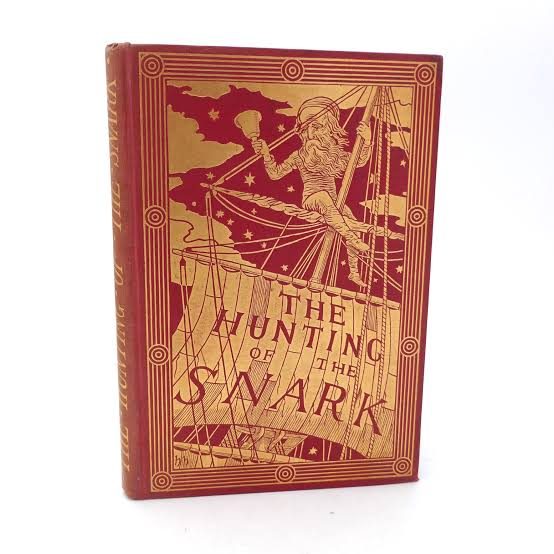
Charles Lutwidge Dodgson (1832–1898) was an English writer, mathematician, logician, and photographer, best known by his pen name, Lewis Carroll. He achieved lasting fame through Alice’s Adventures in Wonderland and Through the Looking-Glass, works that transformed children’s literature with their imaginative worlds, playful language, and logical absurdities. Dodgson was born on 27 January 1832 in Daresbury, Cheshire, England, into a family of eleven children. His father, Charles Dodgson, was an Anglican clergyman, and his mother was Frances Jane Lutwidge. The family later moved to Croft-on-Tees in Yorkshire, where Dodgson spent much of his childhood. He was an imaginative child who enjoyed inventing games, writing stories, and creating puzzles for his brothers and sisters. He received his early education at home before attending Richmond School and Rugby School. In 1851, he entered Christ Church, Oxford, where he studied mathematics and classical subjects. He graduated with distinction and remained at the college as a mathematics lecturer. His academic career continued for many years, and he was ordained as an Anglican deacon in 1861, although he never became a priest. Alongside his academic work, Dodgson developed a strong interest in literature. He wrote poems, humorous pieces, and short stories, initially publishing some of them in magazines. In 1856, he began using the pen name Lewis Carroll, formed from Latin versions of his first and middle names, Carolus Ludovicus, which he translated back into English as Carroll Lewis and rearranged. The idea for his most famous book arose during a boat trip on the River Thames on 4 July 1862, when Dodgson entertained the young Alice Liddell, daughter of the dean of Christ Church, and her sisters with an improvised story. At Alice’s request, he later developed the tale into a manuscript titled Alice’s Adventures Under Ground. The expanded and illustrated book, Alice’s Adventures in Wonderland, was published in 1865, with illustrations by John Tenniel. The book follows Alice as she falls down a rabbit hole into a strange world inhabited by eccentric creatures, where ordinary rules of logic and language are constantly overturned. Its inventive wordplay, memorable characters, and satire of Victorian conventions made it popular with readers of different ages. Dodgson followed it with Through the Looking-Glass, and What Alice Found There in 1871, introducing further imaginative characters, including Tweedledum and Tweedledee, and the poem “Jabberwocky.” Dodgson also wrote other works of fiction and poetry. These included The Hunting of the Snark (1876), a nonsense poem about an unusual expedition, and the two-part fantasy Sylvie and Bruno, published in 1889 and 1893. Although these works attracted readers, none matched the enduring popularity of the Alice books. Mathematics remained central to his professional life. Dodgson published works on geometry, algebra, logic, and mathematical puzzles, including The Game of Logic (1886). His interests extended to photography, a medium in which he became a skilled practitioner during its early decades. His photographic subjects included children, colleagues, and prominent figures of his time, though his photographic practice and relationships with child subjects have also been examined critically by later biographers. Dodgson lived a largely disciplined academic life at Christ Church, balancing teaching and scholarship with his writing and other interests. He was known for his precise thinking, love of puzzles, and fascination with the relationship between language and logic. These qualities are reflected in the playful reasoning and paradoxes that distinguish his literary works. He died of pneumonia on 14 January 1898 at his sisters’ home in Guildford, Surrey, shortly before his sixty-sixth birthday. Today, Lewis Carroll is regarded as one of the most influential writers of literary nonsense. His Alice books continue to inspire adaptations, illustrations, scholarly interpretation, and new generations of readers, while his mathematical and logical writings remain part of his broader intellectual legacy.
Free to read

Free to read
Free to read
Lewis Carroll's work is in the public domain — free for everyone, forever.
Payments are handled by Stripe. You can see everything you have given on your purchases page.