
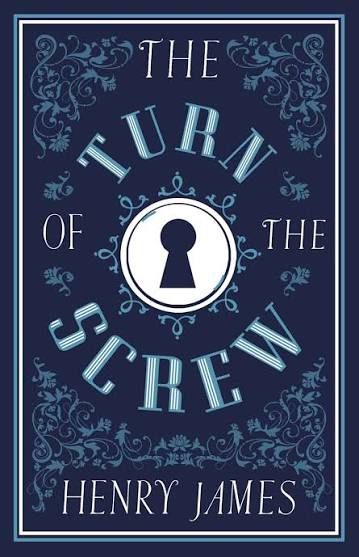
The Turn of the Screw
Free to read
 ✓
Author
Henry James (1843–1916) was an American-born novelist, short-story writer, and literary critic who became one of the most influential figures in English-language literature. He is particularly celebrated for his subtle p
Henry James (1843–1916) was an American-born novelist, short-story writer, and literary critic who became one of the most influential figures in English-language literature. He is particularly celebrated for his subtle psychological insight, sophisticated narrative techniques, and exploration of consciousness, identity, and the differences between American and European cultures. His later works played an important role in the development of literary modernism. James was born on April 15, 1843, in New York City into an intellectually prominent and financially comfortable family. His father, Henry James Sr., was a philosopher and theologian, while his older brother was the psychologist and philosopher William James. The family traveled extensively in Europe during Henry's childhood, exposing him from an early age to European languages, art, literature, and culture. James briefly studied law at Harvard Law School but soon abandoned legal studies to pursue writing. His first stories and essays appeared in American magazines during the 1860s. From the beginning of his career, he was interested less in dramatic action than in the inner lives of his characters and the ways people perceive and misunderstand one another. In the 1870s, James increasingly divided his life between the United States and Europe. He eventually settled permanently in England and became a British citizen in 1915. His position between American and European cultures became one of the defining features of his literary imagination. Many of his novels examine Americans encountering European society and confronting different ideas about freedom, morality, sophistication, and social convention. James's early major novels include Roderick Hudson (1875), The American (1877), and Daisy Miller (1878). Daisy Miller brought him widespread recognition and established his reputation for portraying conflicts between innocence and social convention. The novel's heroine, an independent young American woman in Europe, became one of James's most memorable characters. His later novels became increasingly complex and psychologically focused. The Portrait of a Lady (1881) follows Isabel Archer, a young American woman whose desire for independence is complicated by marriage, social expectations, and manipulation. The novel is widely regarded as one of James's masterpieces and demonstrates his ability to explore the subtle relationship between personal freedom and social pressure. Among his other major works are The Bostonians (1886), The Princess Casamassima (1886), The Turn of the Screw (1898), The Wings of the Dove (1902), The Ambassadors (1903), and The Golden Bowl (1904). His novella The Turn of the Screw is particularly famous for its ambiguity, leaving readers uncertain whether its supernatural events are real or the product of the narrator's disturbed perception. James developed an increasingly sophisticated narrative method known as the “point of view” technique. Rather than presenting events from an all-knowing perspective, he often filtered the story through the consciousness of a particular character. This allowed him to explore uncertainty, perception, memory, and psychological interpretation in unprecedented depth. James also wrote extensively about literature and the craft of fiction. His essays and prefaces, especially those collected in The Art of the Novel, became important contributions to literary criticism. He argued for the importance of artistic freedom and for the novel's ability to represent the complexity of human experience. During his later years, James continued to write despite declining health. He became a respected literary figure in Britain and was awarded the Order of Merit in 1916, shortly before his death. He died in London on February 28, 1916, at the age of seventy-two. Henry James left an enduring influence on modern fiction. His emphasis on psychological depth, subjective experience, and complex narrative perspective influenced writers such as Virginia Woolf, James Joyce, and many later modernists. Today, he is regarded as one of the great masters of the English-language novel and a crucial figure in the transition from nineteenth-century realism to modern literary fiction.
Free to read
Free to read
Henry James's work is in the public domain — free for everyone, forever.
Payments are handled by Stripe. You can see everything you have given on your purchases page.