
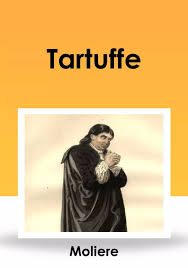
Tartuffe
Free to read
 ✓
Author
Jean-Baptiste Poquelin (1622–1673), better known by his stage name Molière, was a French playwright, actor, director, and one of the greatest masters of comedy in European literature. His plays combined sharp social sati
Jean-Baptiste Poquelin (1622–1673), better known by his stage name Molière, was a French playwright, actor, director, and one of the greatest masters of comedy in European literature. His plays combined sharp social satire, lively dialogue, and sophisticated characterization to expose human vanity, hypocrisy, pretension, and foolishness. His works remain central to the French theatrical tradition and continue to be performed throughout the world. Molière was born on January 15, 1622, in Paris, into a prosperous bourgeois family. His father, Jean Poquelin, was a successful upholsterer who held an official position as supplier to the royal household. Molière received a good education at the Collège de Clermont, a Jesuit institution, and later studied law. Although he qualified as a lawyer, he abandoned a conventional career in order to devote himself to theatre. In 1643, he founded a theatrical company known as the Illustre Théâtre together with Madeleine Béjart and other performers. The enterprise struggled financially, and Molière was briefly imprisoned for debt. After leaving Paris, he spent more than a decade touring the provinces with his company. These years gave him extensive practical experience as an actor, director, and playwright and helped him develop the comic style that would later make him famous. Molière returned to Paris in the 1650s and soon attracted the attention of the royal court. His first major successes included The Precious Damsels (Les Précieuses ridicules, 1659), which mocked fashionable affectations and exaggerated manners. He subsequently produced a remarkable series of comedies, including The School for Husbands, The School for Wives, The Miser, The Imaginary Invalid, and The Bourgeois Gentleman. One of his most famous works is Tartuffe, a satire of religious hypocrisy. The play's central character, Tartuffe, pretends to be a devout and virtuous man while manipulating the wealthy household that trusts him. Because the play was seen by some religious authorities as an attack on religion itself, it encountered strong opposition and was temporarily prohibited. Molière revised the work several times before it was eventually allowed to be performed publicly. Another celebrated comedy, Don Juan, explores hypocrisy, libertinism, and the abuse of social privilege. The Misanthrope presents a more subtle form of comedy, following Alceste, a man disgusted by the dishonesty and artificial politeness of society. Through such characters, Molière transformed comedy into a vehicle for examining serious questions about morality, social behavior, and human nature. Molière's dramatic method combined farce, classical comedy, satire, and elements of popular theatre. He possessed an exceptional ability to turn recognizable social types into memorable characters without reducing them to simple caricatures. His targets included hypocrites, misers, pretentious intellectuals, fashionable social climbers, quack doctors, and authoritarian parents. His central principle was that comedy could entertain audiences while also revealing their own weaknesses. Molière enjoyed the protection of Louis XIV, but his work frequently provoked controversy among powerful social and religious groups. He continued to act as well as write and direct, even while suffering from serious illness. On February 17, 1673, during a performance of The Imaginary Invalid, he became seriously ill on stage. He died later that evening in Paris at the age of fifty-one. Because of the religious customs of the period, Molière was initially denied a conventional burial in consecrated ground, although the king intervened to allow a private burial. His reputation, however, only grew after his death. Molière is now regarded as one of the greatest comic dramatists in world literature, and his works remain a fundamental part of the French theatrical canon. His insight into hypocrisy, vanity, ambition, and self-deception continues to make his comedies remarkably relevant to modern audiences.
Free to read
Molière's work is in the public domain — free for everyone, forever.
Payments are handled by Stripe. You can see everything you have given on your purchases page.