
Audiobook
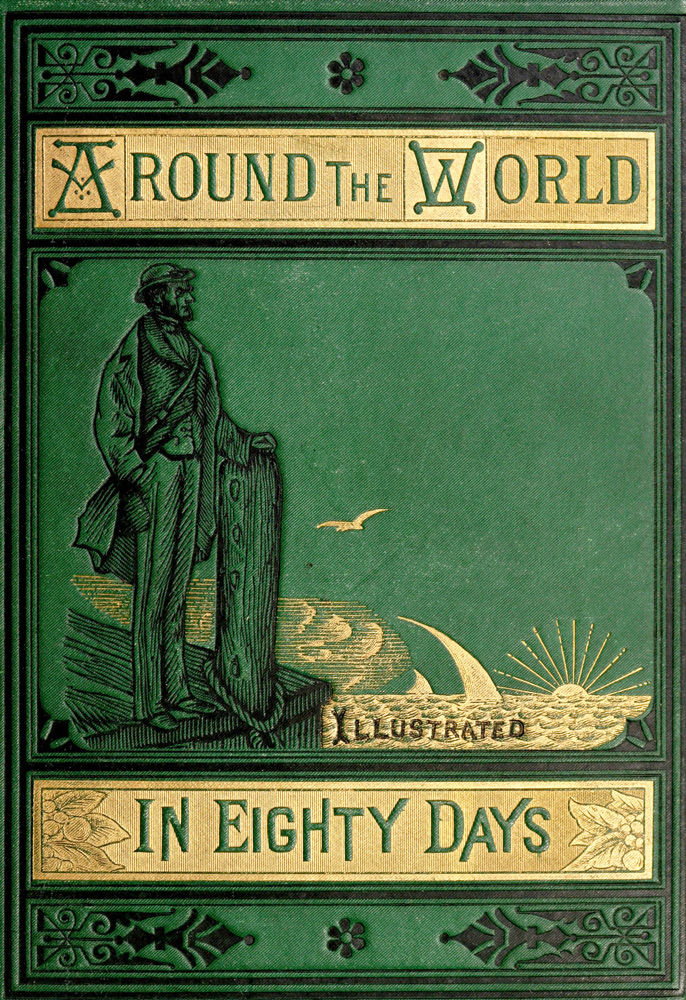
Around the World in Eighty Days
by Jules Verne
Read by Ralph Snelson · LibriVox
Around the World in Eighty Days by Jules Gabriel Verne is a thrilling adventure novel about travel, determination, and the possibilities of modern transportation. The story follows Phileas Fogg, a wealthy and highly disciplined Englishman… Read more
All chapters (37)
Jump to a chapter; the recording moves with you.
- 1. IN WHICH PHILEAS FOGG AND PASSEPARTOUT ACCEPT EACH OTHER, THE ONE AS MASTER, THE OTHER AS MAN
- 2. IN WHICH PASSEPARTOUT IS CONVINCED THAT HE HAS AT LAST FOUND HIS IDEAL
- 3. IN WHICH A CONVERSATION TAKES PLACE WHICH SEEMS LIKELY TO COST PHILEAS FOGG DEAR
- 4. IN WHICH PHILEAS FOGG ASTOUNDS PASSEPARTOUT, HIS SERVANT
- 5. IN WHICH A NEW SPECIES OF FUNDS, UNKNOWN TO THE MONEYED MEN, APPEARS ON ’CHANGE
- 6. IN WHICH FIX, THE DETECTIVE, BETRAYS A VERY NATURAL IMPATIENCE
- 7. WHICH ONCE MORE DEMONSTRATES THE USELESSNESS OF PASSPORTS AS AIDS TO DETECTIVES
- 8. IN WHICH PASSEPARTOUT TALKS RATHER MORE, PERHAPS, THAN IS PRUDENT
- 9. IN WHICH THE RED SEA AND THE INDIAN OCEAN PROVE PROPITIOUS TO THE DESIGNS OF PHILEAS FOGG
- 10. IN WHICH PASSEPARTOUT IS ONLY TOO GLAD TO GET OFF WITH THE LOSS OF HIS SHOES
- 11. IN WHICH PHILEAS FOGG SECURES A CURIOUS MEANS OF CONVEYANCE AT A FABULOUS PRICE
- 12. IN WHICH PHILEAS FOGG AND HIS COMPANIONS VENTURE ACROSS THE INDIAN FORESTS, AND WHAT ENSUED
- 13. IN WHICH PASSEPARTOUT RECEIVES A NEW PROOF THAT FORTUNE FAVORS THE BRAVE
- 14. IN WHICH PHILEAS FOGG DESCENDS THE WHOLE LENGTH OF THE BEAUTIFUL VALLEY OF THE GANGES WITHOUT EVER THINKING OF SEEING IT
- 15. IN WHICH THE BAG OF BANKNOTES DISGORGES SOME THOUSANDS OF POUNDS MORE
- 16. IN WHICH FIX DOES NOT SEEM TO UNDERSTAND IN THE LEAST WHAT IS SAID TO HIM
- 17. SHOWING WHAT HAPPENED ON THE VOYAGE FROM SINGAPORE TO HONG KONG
- 18. IN WHICH PHILEAS FOGG, PASSEPARTOUT, AND FIX GO EACH ABOUT HIS BUSINESS
- 19. IN WHICH PASSEPARTOUT TAKES A TOO GREAT INTEREST IN HIS MASTER, AND WHAT COMES OF IT
- 20. IN WHICH FIX COMES FACE TO FACE WITH PHILEAS FOGG
- 21. IN WHICH THE MASTER OF THE “TANKADERE” RUNS GREAT RISK OF LOSING A REWARD OF TWO HUNDRED POUNDS
- 22. IN WHICH PASSEPARTOUT FINDS OUT THAT, EVEN AT THE ANTIPODES, IT IS CONVENIENT TO HAVE SOME MONEY IN ONE’S POCKET
- 23. IN WHICH PASSEPARTOUT’S NOSE BECOMES OUTRAGEOUSLY LONG
- 24. DURING WHICH MR. FOGG AND PARTY CROSS THE PACIFIC OCEAN
- 25. IN WHICH A SLIGHT GLIMPSE IS HAD OF SAN FRANCISCO
- 26. IN WHICH PHILEAS FOGG AND PARTY TRAVEL BY THE PACIFIC RAILROAD
- 27. IN WHICH PASSEPARTOUT UNDERGOES, AT A SPEED OF TWENTY MILES AN HOUR, A COURSE OF MORMON HISTORY
- 28. IN WHICH PASSEPARTOUT DOES NOT SUCCEED IN MAKING ANYBODY LISTEN TO REASON
- 29. IN WHICH CERTAIN INCIDENTS ARE NARRATED WHICH ARE ONLY TO BE MET WITH ON AMERICAN RAILROADS
- 30. IN WHICH PHILEAS FOGG SIMPLY DOES HIS DUTY
- 31. IN WHICH FIX, THE DETECTIVE, CONSIDERABLY FURTHERS THE INTERESTS OF PHILEAS FOGG
- 32. IN WHICH PHILEAS FOGG ENGAGES IN A DIRECT STRUGGLE WITH BAD FORTUNE
- 33. IN WHICH PHILEAS FOGG SHOWS HIMSELF EQUAL TO THE OCCASION
- 34. IN WHICH PHILEAS FOGG AT LAST REACHES LONDON
- 35. IN WHICH PHILEAS FOGG DOES NOT HAVE TO REPEAT HIS ORDERS TO PASSEPARTOUT TWICE
- 36. IN WHICH PHILEAS FOGG’S NAME IS ONCE MORE AT A PREMIUM ON ’CHANGE
- 37. IN WHICH IT IS SHOWN THAT PHILEAS FOGG GAINED NOTHING BY HIS TOUR AROUND THE WORLD, UNLESS IT WERE HAPPINESS
Transcript 4. IN WHICH PHILEAS FOGG ASTOUNDS PASSEPARTOUT, HIS SERVANT
The recording is in 1. IN WHICH PHILEAS FOGG AND PASSEPARTOUT ACCEPT EACH OTHER, THE ONE AS MASTER, THE OTHER AS MAN. Open that chapter
Read by Ralph Snelson · LibriVox
Having won twenty guineas at whist, and taken leave of his friends, Phileas Fogg, at twenty-five minutes past seven, left the Reform Club.
Passepartout, who had conscientiously studied the programme of his duties, was more than surprised to see his master guilty of the inexactness of appearing at this unaccustomed hour; for, according to rule, he was not due in Saville Row until precisely midnight.
Mr. Fogg repaired to his bedroom, and called out, “Passepartout!”
Passepartout did not reply. It could not be he who was called; it was not the right hour.
“Passepartout!” repeated Mr. Fogg, without raising his voice.
Passepartout made his appearance.
“I’ve called you twice,” observed his master.
“But it is not midnight,” responded the other, showing his watch.
“I know it; I don’t blame you. We start for Dover and Calais in ten minutes.”
A puzzled grin overspread Passepartout’s round face; clearly he had not comprehended his master.
“Monsieur is going to leave home?”
“Yes,” returned Phileas Fogg. “We are going round the world.”
Passepartout opened wide his eyes, raised his eyebrows, held up his hands, and seemed about to collapse, so overcome was he with stupefied astonishment.
“Round the world!” he murmured.
“In eighty days,” responded Mr. Fogg. “So we haven’t a moment to lose.”
“But the trunks?” gasped Passepartout, unconsciously swaying his head from right to left.
“We’ll have no trunks; only a carpet-bag, with two shirts and three pairs of stockings for me, and the same for you. We’ll buy our clothes on the way. Bring down my mackintosh and traveling-cloak, and some stout shoes, though we shall do little walking. Make haste!”
Passepartout tried to reply, but could not. He went out, mounted to his own room, fell into a chair, and muttered: “That’s good, that is! And I, who wanted to remain quiet!”
He mechanically set about making the preparations for departure. Around the world in eighty days! Was his master a fool? No. Was this a joke, then? They were going to Dover; good! To Calais; good again! After all, Passepartout, who had been away from France five years, would not be sorry to set foot on his native soil again. Perhaps they would go as far as Paris, and it would do his eyes good to see Paris once more. But surely a gentleman so chary of his steps would stop there; no doubt—but, then, it was none the less true that he was going away, this so domestic person hitherto!
By eight o’clock Passepartout had packed the modest carpet-bag, containing the wardrobes of his master and himself; then, still troubled in mind, he carefully shut the door of his room, and descended to Mr. Fogg.
Mr. Fogg was quite ready. Under his arm might have been observed a red-bound copy of Bradshaw’s Continental Railway Steam Transit and General Guide, with its timetables showing the arrival and departure of steamers and railways. He took the carpet-bag, opened it, and slipped into it a goodly roll of Bank of England notes, which would pass wherever he might go.
“You have forgotten nothing?” asked he.
“Nothing, monsieur.”
“My mackintosh and cloak?”
“Here they are.”
“Good! Take this carpet-bag,” handing it to Passepartout. “Take good care of it, for there are twenty thousand pounds in it.”
Passepartout nearly dropped the bag, as if the twenty thousand pounds were in gold, and weighed him down.
Master and man then descended, the street-door was double-locked, and at the end of Saville Row they took a cab and drove rapidly to Charing Cross. The cab stopped before the railway station at twenty minutes past eight. Passepartout jumped off the box and followed his master, who, after paying the cabman, was about to enter the station, when a poor beggar-woman, with a child in her arms, her naked feet smeared with mud, her head covered with a wretched bonnet, from which hung a tattered feather, and her shoulders shrouded in a ragged shawl, approached, and mournfully asked for alms.
Mr. Fogg took out the twenty guineas he had just won at whist, and handed them to the beggar, saying, “Here, my good woman. I’m glad that I met you;” and passed on.
Passepartout had a moist sensation about the eyes; his master’s action touched his susceptible heart.
Two first-class tickets for Paris having been speedily purchased, Mr. Fogg was crossing the station to the train, when he perceived his five friends of the Reform.
“Well, gentlemen,” said he, “I’m off, you see; and, if you will examine my passport when I get back, you will be able to judge whether I have accomplished the journey agreed upon.”
“Oh, that would be quite unnecessary, Mr. Fogg,” said Ralph politely. “We will trust your word, as a gentleman of honour.”
“You do not forget when you are due in London again?” asked Stuart.
“In eighty days; on Saturday, the 21st of December, 1872, at a quarter before nine p.m. Good-bye, gentlemen.”
Phileas Fogg and his servant seated themselves in a first-class carriage at twenty minutes before nine; five minutes later the whistle screamed, and the train slowly glided out of the station.
The night was dark, and a fine, steady rain was falling. Phileas Fogg, snugly ensconced in his corner, did not open his lips. Passepartout, not yet recovered from his stupefaction, clung mechanically to the carpet-bag, with its enormous treasure.
Just as the train was whirling through Sydenham, Passepartout suddenly uttered a cry of despair.
“What’s the matter?” asked Mr. Fogg.
“Alas! In my hurry—I—I forgot—”
“What?”
“To turn off the gas in my room!”
“Very well, young man,” returned Mr. Fogg, coolly; “it will burn—at your expense.”
One file per book, with no marks inside it, so the text follows the recording by length rather than by timing — and only while the narration is inside the chapter shown. Tell us if it drifts.