
Audiobook
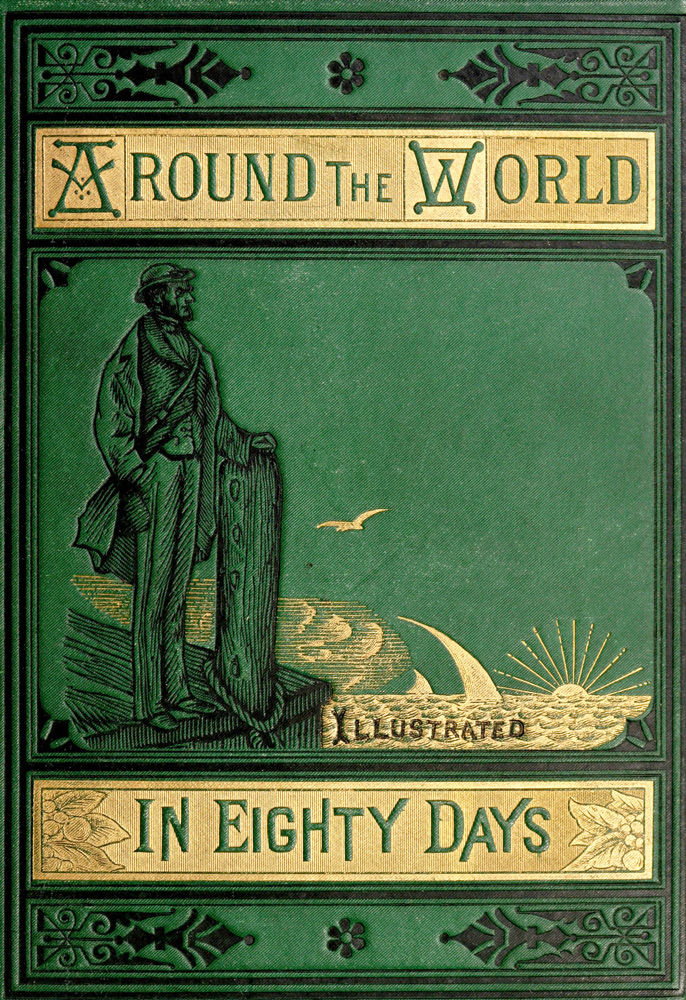
Around the World in Eighty Days
by Jules Verne
Read by Ralph Snelson · LibriVox
Around the World in Eighty Days by Jules Gabriel Verne is a thrilling adventure novel about travel, determination, and the possibilities of modern transportation. The story follows Phileas Fogg, a wealthy and highly disciplined Englishman… Read more
All chapters (37)
Jump to a chapter; the recording moves with you.
- 1. IN WHICH PHILEAS FOGG AND PASSEPARTOUT ACCEPT EACH OTHER, THE ONE AS MASTER, THE OTHER AS MAN
- 2. IN WHICH PASSEPARTOUT IS CONVINCED THAT HE HAS AT LAST FOUND HIS IDEAL
- 3. IN WHICH A CONVERSATION TAKES PLACE WHICH SEEMS LIKELY TO COST PHILEAS FOGG DEAR
- 4. IN WHICH PHILEAS FOGG ASTOUNDS PASSEPARTOUT, HIS SERVANT
- 5. IN WHICH A NEW SPECIES OF FUNDS, UNKNOWN TO THE MONEYED MEN, APPEARS ON ’CHANGE
- 6. IN WHICH FIX, THE DETECTIVE, BETRAYS A VERY NATURAL IMPATIENCE
- 7. WHICH ONCE MORE DEMONSTRATES THE USELESSNESS OF PASSPORTS AS AIDS TO DETECTIVES
- 8. IN WHICH PASSEPARTOUT TALKS RATHER MORE, PERHAPS, THAN IS PRUDENT
- 9. IN WHICH THE RED SEA AND THE INDIAN OCEAN PROVE PROPITIOUS TO THE DESIGNS OF PHILEAS FOGG
- 10. IN WHICH PASSEPARTOUT IS ONLY TOO GLAD TO GET OFF WITH THE LOSS OF HIS SHOES
- 11. IN WHICH PHILEAS FOGG SECURES A CURIOUS MEANS OF CONVEYANCE AT A FABULOUS PRICE
- 12. IN WHICH PHILEAS FOGG AND HIS COMPANIONS VENTURE ACROSS THE INDIAN FORESTS, AND WHAT ENSUED
- 13. IN WHICH PASSEPARTOUT RECEIVES A NEW PROOF THAT FORTUNE FAVORS THE BRAVE
- 14. IN WHICH PHILEAS FOGG DESCENDS THE WHOLE LENGTH OF THE BEAUTIFUL VALLEY OF THE GANGES WITHOUT EVER THINKING OF SEEING IT
- 15. IN WHICH THE BAG OF BANKNOTES DISGORGES SOME THOUSANDS OF POUNDS MORE
- 16. IN WHICH FIX DOES NOT SEEM TO UNDERSTAND IN THE LEAST WHAT IS SAID TO HIM
- 17. SHOWING WHAT HAPPENED ON THE VOYAGE FROM SINGAPORE TO HONG KONG
- 18. IN WHICH PHILEAS FOGG, PASSEPARTOUT, AND FIX GO EACH ABOUT HIS BUSINESS
- 19. IN WHICH PASSEPARTOUT TAKES A TOO GREAT INTEREST IN HIS MASTER, AND WHAT COMES OF IT
- 20. IN WHICH FIX COMES FACE TO FACE WITH PHILEAS FOGG
- 21. IN WHICH THE MASTER OF THE “TANKADERE” RUNS GREAT RISK OF LOSING A REWARD OF TWO HUNDRED POUNDS
- 22. IN WHICH PASSEPARTOUT FINDS OUT THAT, EVEN AT THE ANTIPODES, IT IS CONVENIENT TO HAVE SOME MONEY IN ONE’S POCKET
- 23. IN WHICH PASSEPARTOUT’S NOSE BECOMES OUTRAGEOUSLY LONG
- 24. DURING WHICH MR. FOGG AND PARTY CROSS THE PACIFIC OCEAN
- 25. IN WHICH A SLIGHT GLIMPSE IS HAD OF SAN FRANCISCO
- 26. IN WHICH PHILEAS FOGG AND PARTY TRAVEL BY THE PACIFIC RAILROAD
- 27. IN WHICH PASSEPARTOUT UNDERGOES, AT A SPEED OF TWENTY MILES AN HOUR, A COURSE OF MORMON HISTORY
- 28. IN WHICH PASSEPARTOUT DOES NOT SUCCEED IN MAKING ANYBODY LISTEN TO REASON
- 29. IN WHICH CERTAIN INCIDENTS ARE NARRATED WHICH ARE ONLY TO BE MET WITH ON AMERICAN RAILROADS
- 30. IN WHICH PHILEAS FOGG SIMPLY DOES HIS DUTY
- 31. IN WHICH FIX, THE DETECTIVE, CONSIDERABLY FURTHERS THE INTERESTS OF PHILEAS FOGG
- 32. IN WHICH PHILEAS FOGG ENGAGES IN A DIRECT STRUGGLE WITH BAD FORTUNE
- 33. IN WHICH PHILEAS FOGG SHOWS HIMSELF EQUAL TO THE OCCASION
- 34. IN WHICH PHILEAS FOGG AT LAST REACHES LONDON
- 35. IN WHICH PHILEAS FOGG DOES NOT HAVE TO REPEAT HIS ORDERS TO PASSEPARTOUT TWICE
- 36. IN WHICH PHILEAS FOGG’S NAME IS ONCE MORE AT A PREMIUM ON ’CHANGE
- 37. IN WHICH IT IS SHOWN THAT PHILEAS FOGG GAINED NOTHING BY HIS TOUR AROUND THE WORLD, UNLESS IT WERE HAPPINESS
Transcript 34. IN WHICH PHILEAS FOGG AT LAST REACHES LONDON
The recording is in 1. IN WHICH PHILEAS FOGG AND PASSEPARTOUT ACCEPT EACH OTHER, THE ONE AS MASTER, THE OTHER AS MAN. Open that chapter
Read by Ralph Snelson · LibriVox
Phileas Fogg was in prison. He had been shut up in the Custom House, and he was to be transferred to London the next day.
Passepartout, when he saw his master arrested, would have fallen upon Fix had he not been held back by some policemen. Aouda was thunderstruck at the suddenness of an event which she could not understand. Passepartout explained to her how it was that the honest and courageous Fogg was arrested as a robber. The young woman’s heart revolted against so heinous a charge, and when she saw that she could attempt to do nothing to save her protector, she wept bitterly.
As for Fix, he had arrested Mr. Fogg because it was his duty, whether Mr. Fogg were guilty or not.
The thought then struck Passepartout, that he was the cause of this new misfortune! Had he not concealed Fix’s errand from his master? When Fix revealed his true character and purpose, why had he not told Mr. Fogg? If the latter had been warned, he would no doubt have given Fix proof of his innocence, and satisfied him of his mistake; at least, Fix would not have continued his journey at the expense and on the heels of his master, only to arrest him the moment he set foot on English soil. Passepartout wept till he was blind, and felt like blowing his brains out.
Aouda and he had remained, despite the cold, under the portico of the Custom House. Neither wished to leave the place; both were anxious to see Mr. Fogg again.
That gentleman was really ruined, and that at the moment when he was about to attain his end. This arrest was fatal. Having arrived at Liverpool at twenty minutes before twelve on the 21st of December, he had till a quarter before nine that evening to reach the Reform Club, that is, nine hours and a quarter; the journey from Liverpool to London was six hours.
If anyone, at this moment, had entered the Custom House, he would have found Mr. Fogg seated, motionless, calm, and without apparent anger, upon a wooden bench. He was not, it is true, resigned; but this last blow failed to force him into an outward betrayal of any emotion. Was he being devoured by one of those secret rages, all the more terrible because contained, and which only burst forth, with an irresistible force, at the last moment? No one could tell. There he sat, calmly waiting—for what? Did he still cherish hope? Did he still believe, now that the door of this prison was closed upon him, that he would succeed?
However that may have been, Mr. Fogg carefully put his watch upon the table, and observed its advancing hands. Not a word escaped his lips, but his look was singularly set and stern. The situation, in any event, was a terrible one, and might be thus stated: if Phileas Fogg was honest he was ruined; if he was a knave, he was caught.
Did escape occur to him? Did he examine to see if there were any practicable outlet from his prison? Did he think of escaping from it? Possibly; for once he walked slowly around the room. But the door was locked, and the window heavily barred with iron rods. He sat down again, and drew his journal from his pocket. On the line where these words were written, “21st December, Saturday, Liverpool,” he added, “80th day, 11.40 a.m.,” and waited.
The Custom House clock struck one. Mr. Fogg observed that his watch was two hours too fast.
Two hours! Admitting that he was at this moment taking an express train, he could reach London and the Reform Club by a quarter before nine, p.m. His forehead slightly wrinkled.
At thirty-three minutes past two he heard a singular noise outside, then a hasty opening of doors. Passepartout’s voice was audible, and immediately after that of Fix. Phileas Fogg’s eyes brightened for an instant.
The door swung open, and he saw Passepartout, Aouda, and Fix, who hurried towards him.
Fix was out of breath, and his hair was in disorder. He could not speak. “Sir,” he stammered, “sir—forgive me—most—unfortunate resemblance—robber arrested three days ago—you are free!”
Phileas Fogg was free! He walked to the detective, looked him steadily in the face, and with the only rapid motion he had ever made in his life, or which he ever would make, drew back his arms, and with the precision of a machine knocked Fix down.
“Well hit!” cried Passepartout, “Parbleu! that’s what you might call a good application of English fists!”
Fix, who found himself on the floor, did not utter a word. He had only received his deserts. Mr. Fogg, Aouda, and Passepartout left the Custom House without delay, got into a cab, and in a few moments descended at the station.
Phileas Fogg asked if there was an express train about to leave for London. It was forty minutes past two. The express train had left thirty-five minutes before. Phileas Fogg then ordered a special train.
There were several rapid locomotives on hand; but the railway arrangements did not permit the special train to leave until three o’clock.
At that hour Phileas Fogg, having stimulated the engineer by the offer of a generous reward, at last set out towards London with Aouda and his faithful servant.
It was necessary to make the journey in five hours and a half; and this would have been easy on a clear road throughout. But there were forced delays, and when Mr. Fogg stepped from the train at the terminus, all the clocks in London were striking ten minutes before nine.[1]
Having made the tour of the world, he was behind-hand five minutes. He had lost the wager!
[1] A somewhat remarkable eccentricity on the part of the London clocks!—TRANSLATOR.
One file per book, with no marks inside it, so the text follows the recording by length rather than by timing — and only while the narration is inside the chapter shown. Tell us if it drifts.