
Audiobook
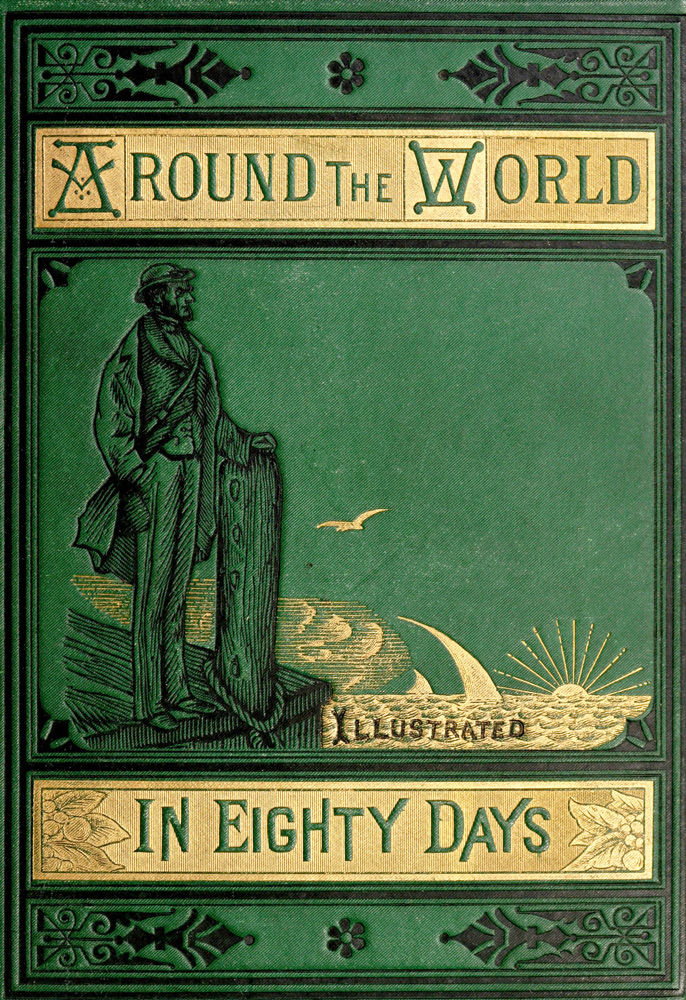
Around the World in Eighty Days
by Jules Verne
Read by Ralph Snelson · LibriVox
Around the World in Eighty Days by Jules Gabriel Verne is a thrilling adventure novel about travel, determination, and the possibilities of modern transportation. The story follows Phileas Fogg, a wealthy and highly disciplined Englishman… Read more
All chapters (37)
Jump to a chapter; the recording moves with you.
- 1. IN WHICH PHILEAS FOGG AND PASSEPARTOUT ACCEPT EACH OTHER, THE ONE AS MASTER, THE OTHER AS MAN
- 2. IN WHICH PASSEPARTOUT IS CONVINCED THAT HE HAS AT LAST FOUND HIS IDEAL
- 3. IN WHICH A CONVERSATION TAKES PLACE WHICH SEEMS LIKELY TO COST PHILEAS FOGG DEAR
- 4. IN WHICH PHILEAS FOGG ASTOUNDS PASSEPARTOUT, HIS SERVANT
- 5. IN WHICH A NEW SPECIES OF FUNDS, UNKNOWN TO THE MONEYED MEN, APPEARS ON ’CHANGE
- 6. IN WHICH FIX, THE DETECTIVE, BETRAYS A VERY NATURAL IMPATIENCE
- 7. WHICH ONCE MORE DEMONSTRATES THE USELESSNESS OF PASSPORTS AS AIDS TO DETECTIVES
- 8. IN WHICH PASSEPARTOUT TALKS RATHER MORE, PERHAPS, THAN IS PRUDENT
- 9. IN WHICH THE RED SEA AND THE INDIAN OCEAN PROVE PROPITIOUS TO THE DESIGNS OF PHILEAS FOGG
- 10. IN WHICH PASSEPARTOUT IS ONLY TOO GLAD TO GET OFF WITH THE LOSS OF HIS SHOES
- 11. IN WHICH PHILEAS FOGG SECURES A CURIOUS MEANS OF CONVEYANCE AT A FABULOUS PRICE
- 12. IN WHICH PHILEAS FOGG AND HIS COMPANIONS VENTURE ACROSS THE INDIAN FORESTS, AND WHAT ENSUED
- 13. IN WHICH PASSEPARTOUT RECEIVES A NEW PROOF THAT FORTUNE FAVORS THE BRAVE
- 14. IN WHICH PHILEAS FOGG DESCENDS THE WHOLE LENGTH OF THE BEAUTIFUL VALLEY OF THE GANGES WITHOUT EVER THINKING OF SEEING IT
- 15. IN WHICH THE BAG OF BANKNOTES DISGORGES SOME THOUSANDS OF POUNDS MORE
- 16. IN WHICH FIX DOES NOT SEEM TO UNDERSTAND IN THE LEAST WHAT IS SAID TO HIM
- 17. SHOWING WHAT HAPPENED ON THE VOYAGE FROM SINGAPORE TO HONG KONG
- 18. IN WHICH PHILEAS FOGG, PASSEPARTOUT, AND FIX GO EACH ABOUT HIS BUSINESS
- 19. IN WHICH PASSEPARTOUT TAKES A TOO GREAT INTEREST IN HIS MASTER, AND WHAT COMES OF IT
- 20. IN WHICH FIX COMES FACE TO FACE WITH PHILEAS FOGG
- 21. IN WHICH THE MASTER OF THE “TANKADERE” RUNS GREAT RISK OF LOSING A REWARD OF TWO HUNDRED POUNDS
- 22. IN WHICH PASSEPARTOUT FINDS OUT THAT, EVEN AT THE ANTIPODES, IT IS CONVENIENT TO HAVE SOME MONEY IN ONE’S POCKET
- 23. IN WHICH PASSEPARTOUT’S NOSE BECOMES OUTRAGEOUSLY LONG
- 24. DURING WHICH MR. FOGG AND PARTY CROSS THE PACIFIC OCEAN
- 25. IN WHICH A SLIGHT GLIMPSE IS HAD OF SAN FRANCISCO
- 26. IN WHICH PHILEAS FOGG AND PARTY TRAVEL BY THE PACIFIC RAILROAD
- 27. IN WHICH PASSEPARTOUT UNDERGOES, AT A SPEED OF TWENTY MILES AN HOUR, A COURSE OF MORMON HISTORY
- 28. IN WHICH PASSEPARTOUT DOES NOT SUCCEED IN MAKING ANYBODY LISTEN TO REASON
- 29. IN WHICH CERTAIN INCIDENTS ARE NARRATED WHICH ARE ONLY TO BE MET WITH ON AMERICAN RAILROADS
- 30. IN WHICH PHILEAS FOGG SIMPLY DOES HIS DUTY
- 31. IN WHICH FIX, THE DETECTIVE, CONSIDERABLY FURTHERS THE INTERESTS OF PHILEAS FOGG
- 32. IN WHICH PHILEAS FOGG ENGAGES IN A DIRECT STRUGGLE WITH BAD FORTUNE
- 33. IN WHICH PHILEAS FOGG SHOWS HIMSELF EQUAL TO THE OCCASION
- 34. IN WHICH PHILEAS FOGG AT LAST REACHES LONDON
- 35. IN WHICH PHILEAS FOGG DOES NOT HAVE TO REPEAT HIS ORDERS TO PASSEPARTOUT TWICE
- 36. IN WHICH PHILEAS FOGG’S NAME IS ONCE MORE AT A PREMIUM ON ’CHANGE
- 37. IN WHICH IT IS SHOWN THAT PHILEAS FOGG GAINED NOTHING BY HIS TOUR AROUND THE WORLD, UNLESS IT WERE HAPPINESS
Transcript 7. WHICH ONCE MORE DEMONSTRATES THE USELESSNESS OF PASSPORTS AS AIDS TO DETECTIVES
The recording is in 1. IN WHICH PHILEAS FOGG AND PASSEPARTOUT ACCEPT EACH OTHER, THE ONE AS MASTER, THE OTHER AS MAN. Open that chapter
Read by Ralph Snelson · LibriVox
The detective passed down the quay, and rapidly made his way to the consul’s office, where he was at once admitted to the presence of that official.
“Consul,” said he, without preamble, “I have strong reasons for believing that my man is a passenger on the ‘Mongolia.’” And he narrated what had just passed concerning the passport.
“Well, Mr. Fix,” replied the consul, “I shall not be sorry to see the rascal’s face; but perhaps he won’t come here—that is, if he is the person you suppose him to be. A robber doesn’t quite like to leave traces of his flight behind him; and, besides, he is not obliged to have his passport countersigned.”
“If he is as shrewd as I think he is, consul, he will come.”
“To have his passport visaed?”
“Yes. Passports are only good for annoying honest folks, and aiding in the flight of rogues. I assure you it will be quite the thing for him to do; but I hope you will not visa the passport.”
“Why not? If the passport is genuine I have no right to refuse.”
“Still, I must keep this man here until I can get a warrant to arrest him from London.”
“Ah, that’s your look-out. But I cannot—”
The consul did not finish his sentence, for as he spoke a knock was heard at the door, and two strangers entered, one of whom was the servant whom Fix had met on the quay. The other, who was his master, held out his passport with the request that the consul would do him the favour to visa it. The consul took the document and carefully read it, whilst Fix observed, or rather devoured, the stranger with his eyes from a corner of the room.
“You are Mr. Phileas Fogg?” said the consul, after reading the passport.
“I am.”
“And this man is your servant?”
“He is: a Frenchman, named Passepartout.”
“You are from London?”
“Yes.”
“And you are going—”
“To Bombay.”
“Very good, sir. You know that a visa is useless, and that no passport is required?”
“I know it, sir,” replied Phileas Fogg; “but I wish to prove, by your visa, that I came by Suez.”
“Very well, sir.”
The consul proceeded to sign and date the passport, after which he added his official seal. Mr. Fogg paid the customary fee, coldly bowed, and went out, followed by his servant.
“Well?” queried the detective.
“Well, he looks and acts like a perfectly honest man,” replied the consul.
“Possibly; but that is not the question. Do you think, consul, that this phlegmatic gentleman resembles, feature by feature, the robber whose description I have received?”
“I concede that; but then, you know, all descriptions—”
“I’ll make certain of it,” interrupted Fix. “The servant seems to me less mysterious than the master; besides, he’s a Frenchman, and can’t help talking. Excuse me for a little while, consul.”
Fix started off in search of Passepartout.
Meanwhile Mr. Fogg, after leaving the consulate, repaired to the quay, gave some orders to Passepartout, went off to the “Mongolia” in a boat, and descended to his cabin. He took up his note-book, which contained the following memoranda:
“Left London, Wednesday, October 2nd, at 8.45 p.m.
“Reached Paris, Thursday, October 3rd, at 7.20 a.m.
“Left Paris, Thursday, at 8.40 a.m.
“Reached Turin by Mont Cenis, Friday, October 4th, at 6.35 a.m.
“Left Turin, Friday, at 7.20 a.m.
“Arrived at Brindisi, Saturday, October 5th, at 4 p.m.
“Sailed on the ‘Mongolia,’ Saturday, at 5 p.m.
“Reached Suez, Wednesday, October 9th, at 11 a.m.
“Total of hours spent, 158½; or, in days, six days and a half.”
These dates were inscribed in an itinerary divided into columns, indicating the month, the day of the month, and the day for the stipulated and actual arrivals at each principal point Paris, Brindisi, Suez, Bombay, Calcutta, Singapore, Hong Kong, Yokohama, San Francisco, New York, and London—from the 2nd of October to the 21st of December; and giving a space for setting down the gain made or the loss suffered on arrival at each locality. This methodical record thus contained an account of everything needed, and Mr. Fogg always knew whether he was behind-hand or in advance of his time. On this Friday, October 9th, he noted his arrival at Suez, and observed that he had as yet neither gained nor lost. He sat down quietly to breakfast in his cabin, never once thinking of inspecting the town, being one of those Englishmen who are wont to see foreign countries through the eyes of their domestics.
One file per book, with no marks inside it, so the text follows the recording by length rather than by timing — and only while the narration is inside the chapter shown. Tell us if it drifts.